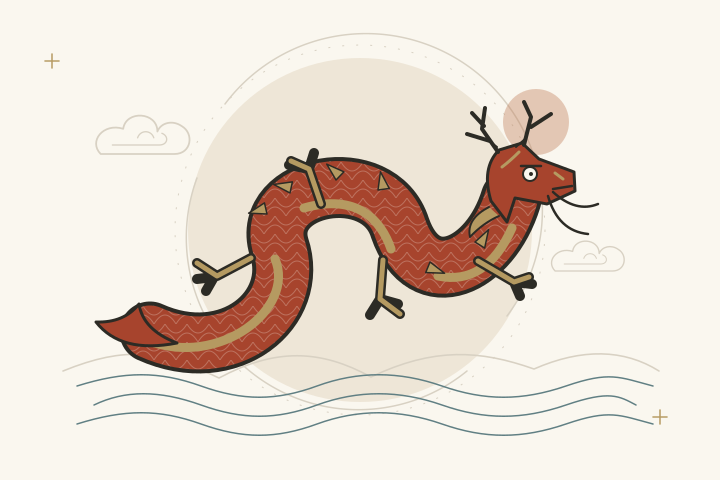
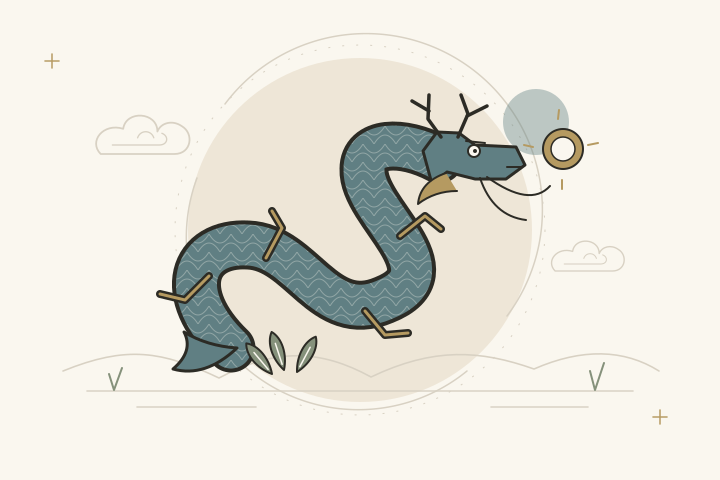
Meet the long, a creature that can glide through clouds without needing a pair of wings. Chinese dragons connect water, weather, power, and good fortune, but their personalities vary between texts. Some are celestial symbols; others become demanding rulers of rivers and seas in later storytelling. There is a whole dragon family to explore.
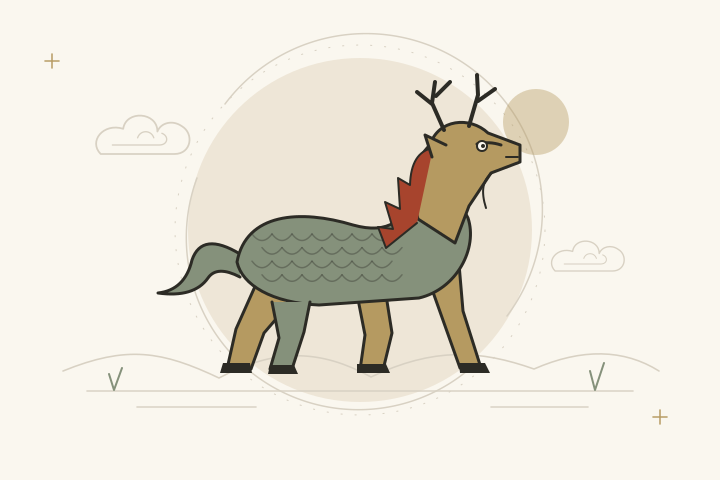
The qilin is a wondrous hoofed creature linked with benevolence and auspicious appearances. It looks formidable in many later illustrations, yet its reputation emphasizes gentleness. Sometimes nicknamed the Chinese unicorn, it has a richer and more variable identity than that comparison suggests, from early poetry to unexpected encounters with real giraffes.
Nine tails make this fox easy to recognize, but they do not guarantee a friendly personality. An early mountain text describes a dangerous creature, while later literature develops powerful fox spirits and human disguises. Modern stories may turn it into a romantic hero, a cunning villain, or an adorable companion with serious tail-management problems.
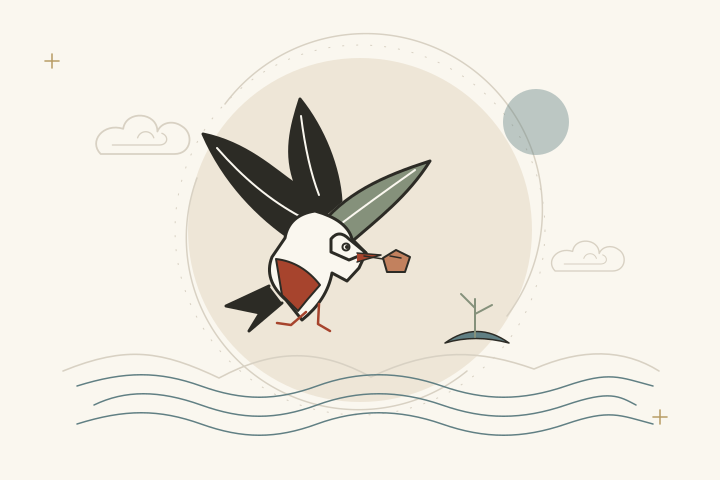
Jingwei is a small bird with a task bigger than any ocean: carrying wood and stones to fill the sea that drowned her. The Classic of Mountains and Seas identifies her as the transformed daughter of the Flame Emperor. Her story holds grief and determination together, making every tiny delivery feel unexpectedly powerful.
Meet the long, a creature that can glide through clouds without needing a pair of wings. Chinese dragons connect water, weather, power, and good fortune, but their personalities vary between texts. Some are celestial symbols; others become demanding rulers of rivers and seas in later storytelling. There is a whole dragon family to explore.
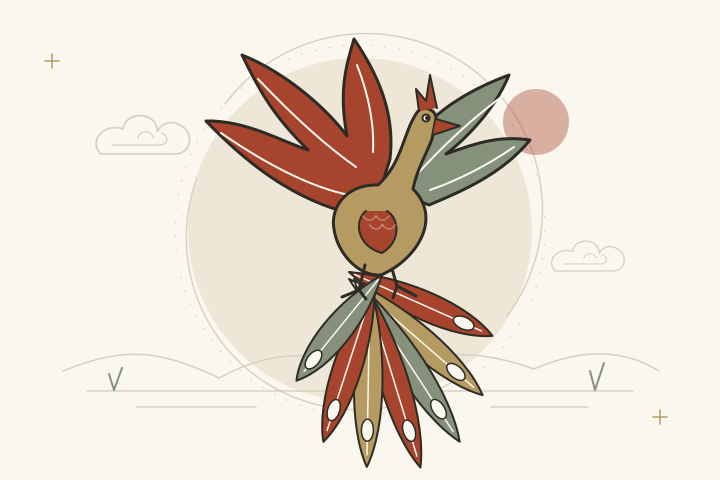
The fenghuang is an elegant mythical bird associated with virtue and a peaceful world. English often calls it a phoenix, but that translation can be misleading: the familiar story of burning and returning from ashes is not its defining ancient Chinese legend. Think brilliant plumage, graceful movement, and an appearance worth celebrating.
The qilin is a wondrous hoofed creature linked with benevolence and auspicious appearances. It looks formidable in many later illustrations, yet its reputation emphasizes gentleness. Sometimes nicknamed the Chinese unicorn, it has a richer and more variable identity than that comparison suggests, from early poetry to unexpected encounters with real giraffes.
Nine tails make this fox easy to recognize, but they do not guarantee a friendly personality. An early mountain text describes a dangerous creature, while later literature develops powerful fox spirits and human disguises. Modern stories may turn it into a romantic hero, a cunning villain, or an adorable companion with serious tail-management problems.
Taotie has an appetite big enough to become a moral lesson. The name is also used for staring animal-face designs on ancient bronzes, although that label was applied after many of the objects were made. A hungry monster, a warning about greed, and an archaeological motif meet here without being exactly the same thing.
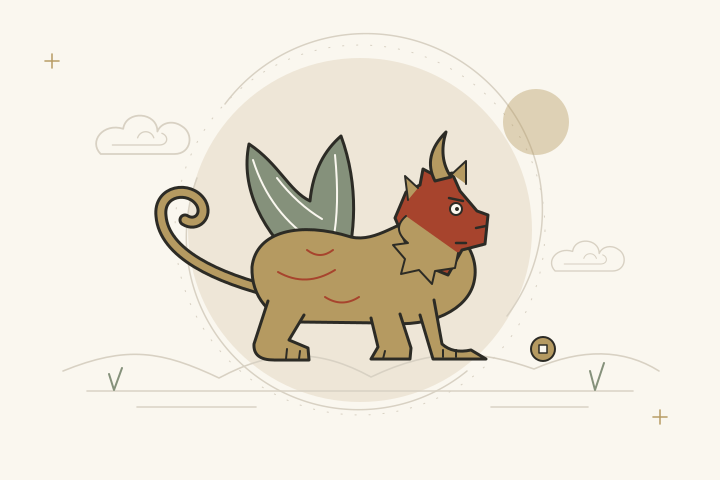
Today’s pixiu is a fierce-looking guardian often associated with attracting and keeping wealth. Its ancient name has a more complicated past: early texts mention formidable beasts, not a complete instruction manual for money charms. The familiar creature with a dragonlike head and generous appetite belongs to a much later, evolving visual and popular tradition.
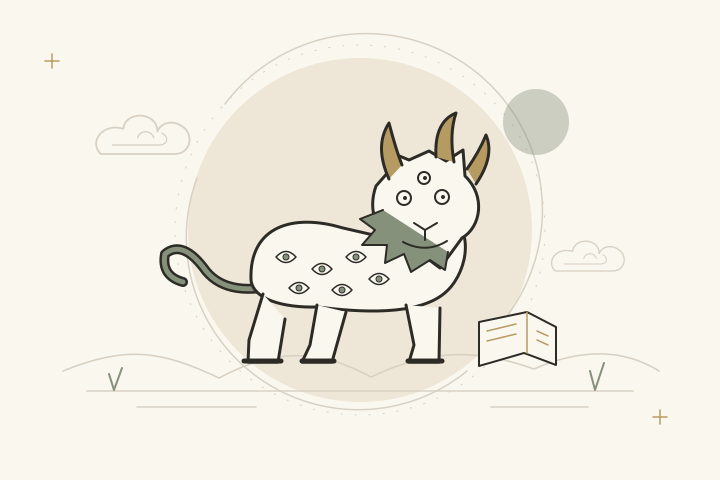
Bai Ze is the supernatural expert you would want nearby when a strange spirit appears. A later account says this speaking beast explained thousands of spirit beings to the Yellow Emperor. Its reputation combines protective knowledge with a wonderfully practical idea: an alarming unknown becomes easier to face once someone can tell you what it is.
A tortoise and snake form one of Chinese mythology’s most distinctive partnerships. Xuanwu, often translated as the Dark Warrior, represents the north in a system of celestial guardians and is associated with winter and water. Later religious traditions develop the name into a powerful deity, adding another chapter to the animal emblem’s history.
Qinglong is the dragon with a particular place in the cosmic map: the east. Often called the Azure Dragon, it belongs to the four directional guardians and carries spring and wood associations. Its blue-green name describes a traditional color range, while its long form helps turn a region of the heavens into a memorable creature.
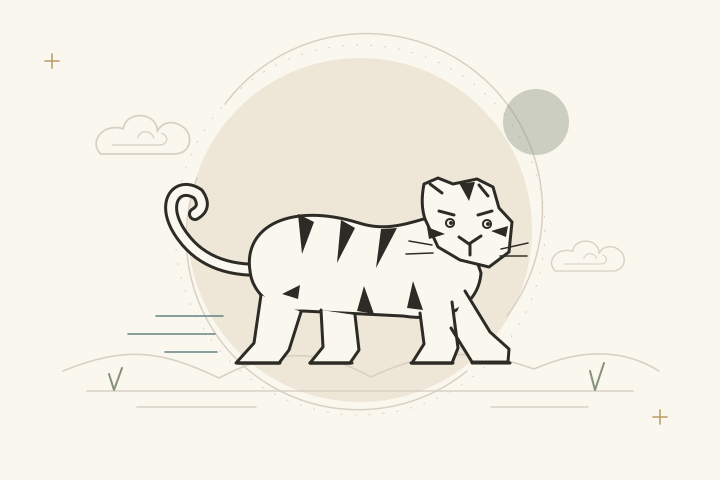
Baihu, the White Tiger, gives the western direction a fierce and memorable guardian. In Chinese cosmological traditions it is associated with autumn and metal, and it appears alongside a dragon, a red bird, and a tortoise-snake. This celestial figure carries symbolic meaning beyond the appearance of a pale tiger in the natural world.
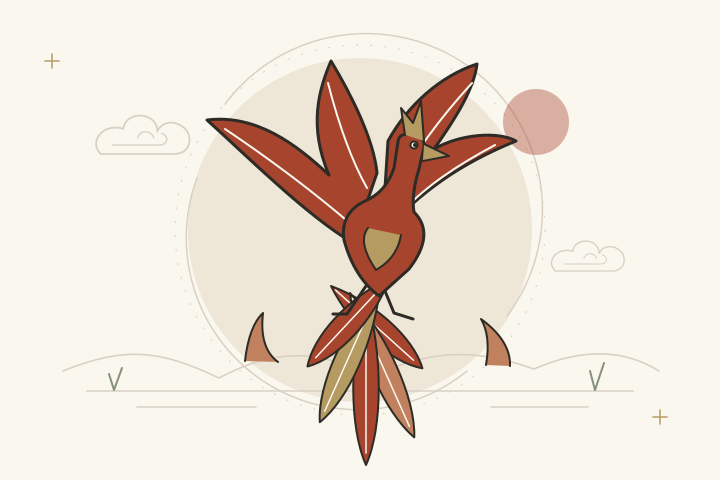
Zhuque, the Vermilion Bird, gives the southern sky a feathered guardian. Associated with summer and fire, this celestial bird belongs to a system of directional symbols rather than one adventure story. It may resemble a magnificent phoenix in art, but its particular job is keeping the cosmic compass pointed south.
Kunpeng begins as an unimaginably large fish and becomes a bird whose wings resemble clouds hanging across the sky. The transformation opens the Zhuangzi, where impossible scale invites readers to reconsider their own perspective. This is mythology with a philosophical question attached: how much of the world can a small viewpoint understand?
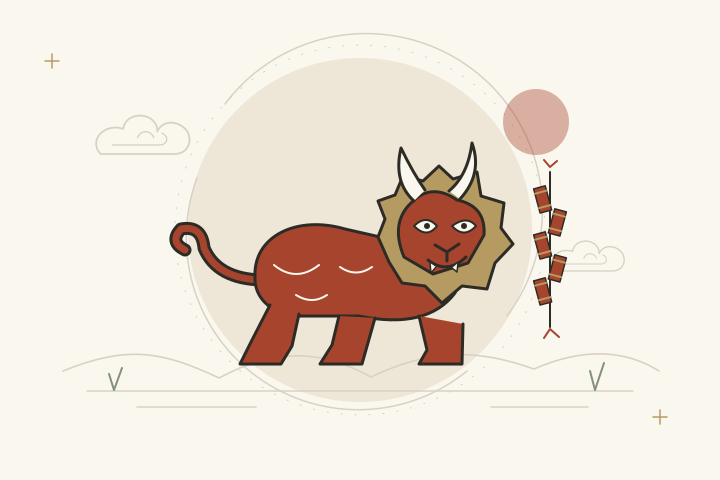
Nian is the New Year monster of a familiar modern folktale: a terrifying visitor outwitted by red decorations, bright fire, and loud noise. It makes a memorable festival story, but the tale's earliest source remains uncertain. Older records of protective New Year customs deserve their own separate history and should not be confused with the beast's biography.
Hundun brings a strange philosophical warning: good intentions can ruin what they do not understand. In the Zhuangzi, a hospitable ruler without the usual human openings dies when friends try to improve him. Other texts give similarly named figures different roles. The famous faceless shape is a tradition with layers, not one consistent monster biography.
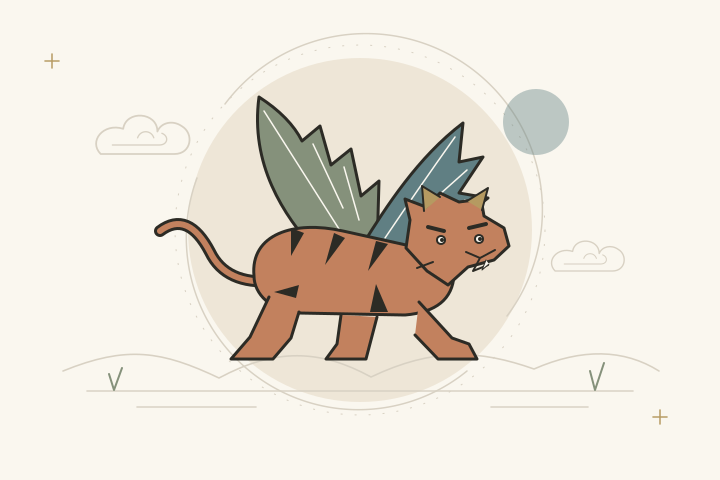
Qiongqi is a dangerous creature whose ancient portraits refuse to agree: one looks like a bristling ox, another like a winged tiger. A later account makes it a champion of the wrong side, rewarding wickedness and attacking the innocent. It is a memorable example of mythology preserving alternatives instead of one official design.
Taowu gives stubborn refusal a monstrous reputation. An early account uses the name for an unteachable son or clan; a later collection describes a shaggy, tigerlike creature with a human face and an enormous tail. Following that change reveals how a warning about human conduct could acquire teeth, paws, and a very inconvenient silhouette.
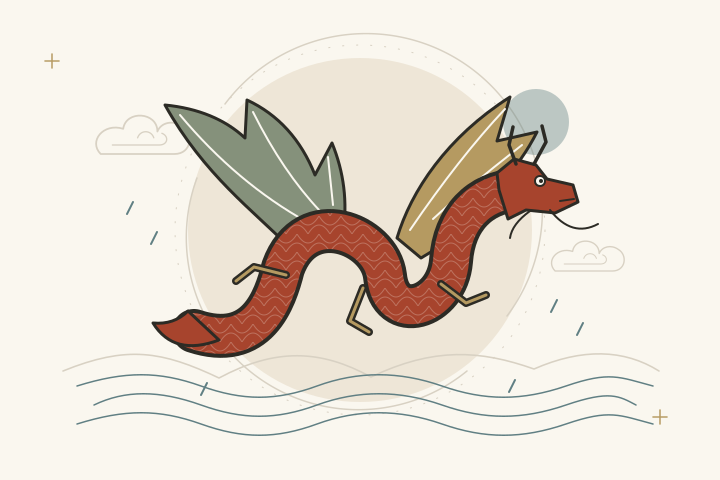
Yinglong is a dragon of battles and rain, helping the Yellow Emperor in legends recorded by the Classic of Mountains and Seas. Later interpretation gives it wings, making it visually distinctive among Chinese dragons. Its stories connect supernatural warfare with water, drought, and the hope that a dragon-shaped image might bring the rain back.
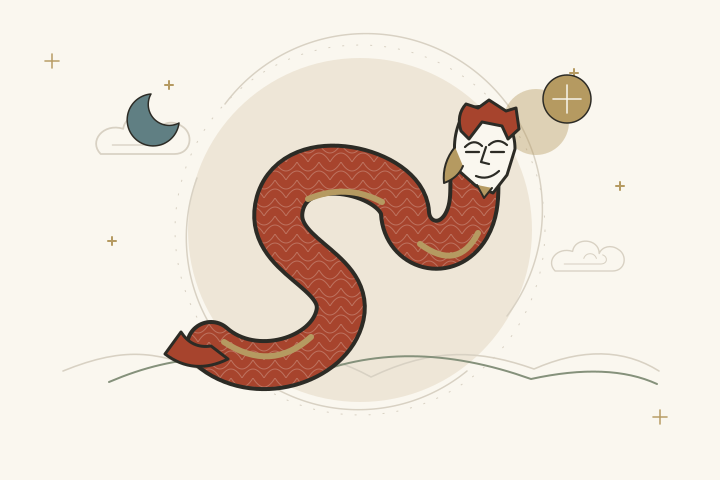
Zhu Long, the Torch Dragon, makes ordinary dragon powers seem modest: its gaze is associated with daylight and darkness. The Classic of Mountains and Seas describes a red, human-faced serpent in a remote northern landscape. A closely related figure, Zhuyin, connects breathing with seasons and wind. These are cosmic images rather than a conventional monster chase.
Jingwei is a small bird with a task bigger than any ocean: carrying wood and stones to fill the sea that drowned her. The Classic of Mountains and Seas identifies her as the transformed daughter of the Flame Emperor. Her story holds grief and determination together, making every tiny delivery feel unexpectedly powerful.
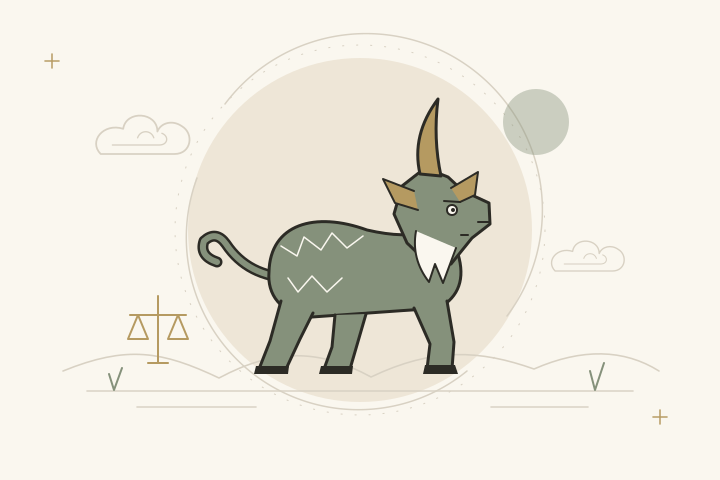
Xiezhi is a mythical judge's helper with a single horn and a remarkable reputation for recognizing guilt. A story recorded in the Lunheng has the creature butt the guilty and spare the innocent. The same author questions that supernatural ability, making Xiezhi a fascinating meeting point between a justice legend and ancient skepticism.