THE ART OF WAR CHAPTER 03
Attack by Stratagem
谋攻篇
What remains intact after success is part of its value.
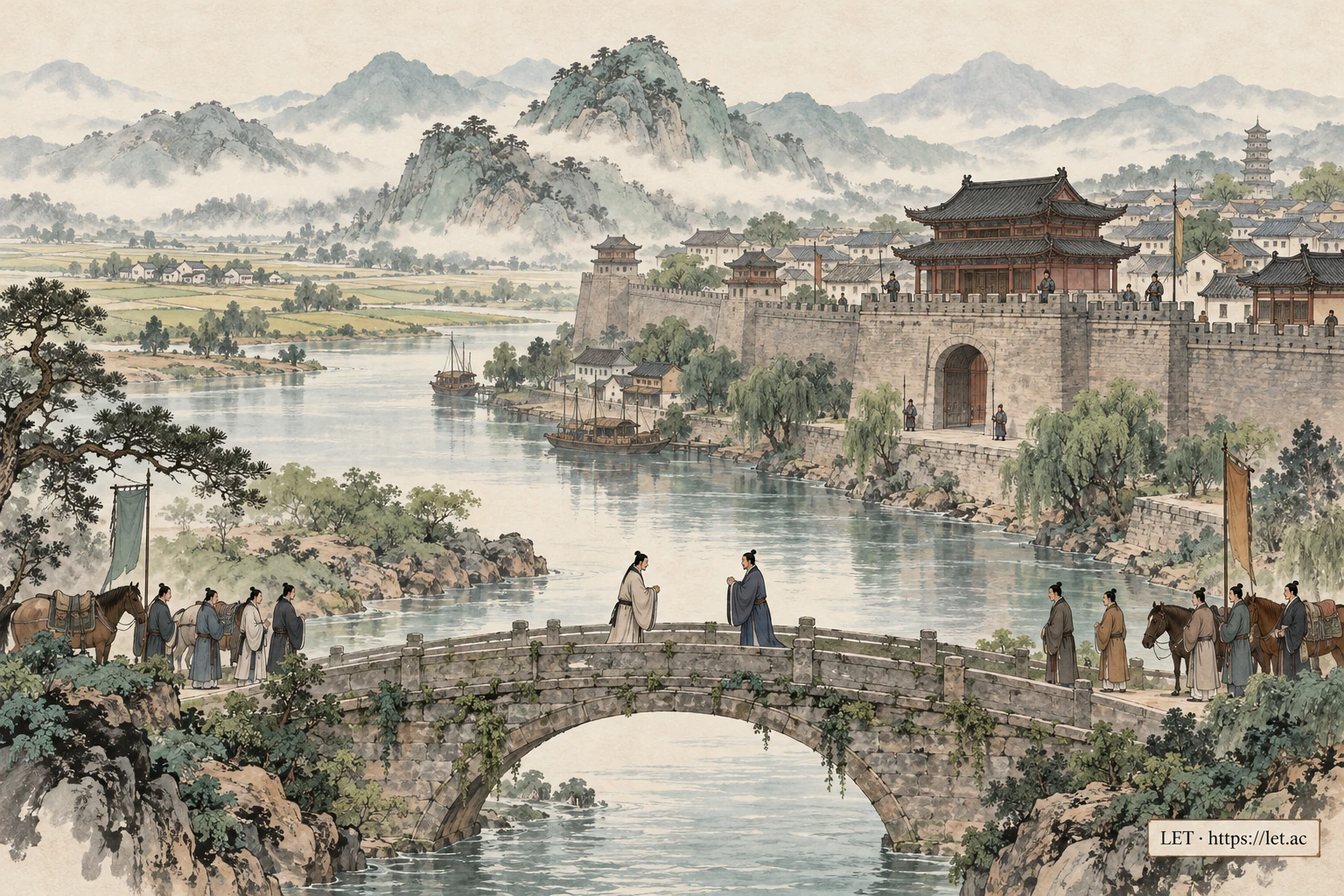
Sun Tzu asks whether an objective can be achieved while preserving people and capacity. The chapter ranks plans, alliances, battle, and siege, then examines relative strength, command, and knowing both sides. Read the complete text with independent English, modern Chinese, bilingual commentary, and a fictional example about sharing a community space.
01 / A reading of the text, with context.
1. Judge a victory by what it preserves
Sun Tzu says: In the use of an army, bringing a state under control intact is best; breaking it is second best. Taking an army intact is best; breaking it is second best. Taking a brigade intact is best; breaking it is second best. Taking a company intact is best; breaking it is second best. Taking a squad intact is best; breaking it is second best. Thus winning every one of a hundred battles is not the highest excellence. Bringing another's army to submit without battle is the highest excellence.
02 / A reading of the text, with context.
2. Examine the plan before escalating the struggle
Therefore, the highest use of an army is to defeat the enemy's plans. Next is to break its alliances; next, to attack its forces; the lowest is to attack its fortified cities. Assaulting a city is a method for when there is no alternative. Building large protective shields and covered siege carts, and preparing the equipment, takes three months before it is ready. Raising earthworks against the walls takes another three months to finish. If a commander cannot master anger and sends troops clinging to the walls like ants, a third of the soldiers may be killed while the city remains untaken. This is the disaster of assaulting a city.
03 / A reading of the text, with context.
3. Keep the objective and its cost together
Thus those skilled in using an army bring another's forces to submit without battle, take another's cities without assault, and bring down another's state without a prolonged campaign. They must contend in the world through a strategy of keeping things whole. Then their forces are not worn down, and the advantages can be preserved intact. This is the method of attacking through strategy.
04 / A reading of the text, with context.
4. Match the action to the actual balance of strength
Thus the method of using an army is this: with ten times the enemy's numbers, surround them; with five times, attack them; with twice their numbers, divide your forces. When evenly matched, be able to fight; when fewer, be able to hold a defensive position; when inferior, be able to avoid them. A small force that stubbornly stands against a much larger one becomes its captive.
05 / A reading of the text, with context.
5. Give responsibility the knowledge and authority it needs
The commander is a support of the state. When that support is complete, the state will be strong; when it has gaps, the state will be weak. A ruler can therefore harm the army in three ways. Not knowing that the army cannot advance, yet ordering it forward, or not knowing that it cannot withdraw, yet ordering it back: this is fettering the army. Not understanding the army's affairs, yet sharing in its administration, confuses its soldiers. Not understanding the judgment its situation requires, yet sharing in its command responsibilities, makes its soldiers doubtful. Once the army is confused and doubtful, trouble from other rulers will arrive. This is called disordering one's own army and handing victory to the enemy.
06 / A reading of the text, with context.
6. Examine five conditions for success
Thus there are five ways to recognize the conditions of victory. Those who know when they can fight and when they cannot will win. Those who understand how to use larger and smaller forces will win. Those whose leaders and followers share the same purpose will win. Those who are prepared and wait for an unprepared opponent will win. Those whose commander is capable and whose ruler does not interfere will win. These five are the way to judge victory.
07 / A reading of the text, with context.
7. Know the other side, and know your own limits
Therefore it is said: Know the other side and know yourself, and in a hundred battles you will not be in peril. Know yourself but not the other side, and you will win some and lose some. Know neither the other side nor yourself, and every battle will put you in peril.
PAUSE & CONSIDER
Ideas to keep
- Judge the result together with the people, resources, and capacity it leaves intact.
- Understand a disputed plan and its assumptions before the disagreement becomes harder to resolve.
- Choose an action the actual conditions can support; willingness alone does not supply capacity.
- Pair capable responsibility with a clear remit, shared purpose, and preparation.
- Ask others about their needs, check your own limits, and update both as circumstances change.
AN ILLUSTRATIVE MODERN SCENARIO
Sharing a community space: an illustrative fictional scenario
A community center receives two requests for the same Saturday morning. A volunteer repair group wants to help residents mend household objects; a language circle wants a quiet conversation session. The booking form offers a single whole-building slot, so both groups ask for exclusive use. Each assumes that accepting the other's request means canceling its own. An exchange about who booked first grows tense, although no one has yet checked what each activity actually needs.
The coordinator asks each group to describe a workable session. Repair volunteers need sturdy tables, power outlets, and access to their tools from ten until noon. The language circle needs a quieter room for an hour and can begin at half past ten. The center has a main hall and a smaller room separated by a corridor. Both are available, but the form hides that distinction. Clarifying the needs changes the problem from choosing a winning group to arranging two activities within the building's real limits.
Representatives walk through both rooms with the caretaker. They test the ordinary repair noise with the doors closed, check that participants can reach the smaller room without passing through the worktables, and confirm where materials may be stored. The groups propose a trial: repairs in the hall from ten to noon, conversation in the smaller room from half past ten to half past eleven. Each appoints a session lead, so the caretaker is not expected to direct both activities. The coordinator can adjust signs and room setup within the agreed plan; a change affecting either group's session must be discussed with its lead.
Preparation still matters. The schedule includes time to clear tables and return shared equipment. A common notice explains which door to use, and both leads have the caretaker's contact details. If noise makes the smaller room unsuitable during the trial, the leads will pause the affected activity, discuss another time with participants, and decide together whether the arrangement should be repeated. This fallback makes the limits explicit without promising that two rooms automatically solve every conflict.
In this fictional trial, both sessions work within the agreed limits. Afterward the leads review the noise, access, and cleanup with the caretaker. They keep the arrangement, add separate room choices to the booking form, and record who handles future overlaps. Neither group has been defeated or misled. The useful result is that residents can attend both kinds of activity, the space is ready for its next users, and the groups have a clearer way to cooperate again.
孙子从“全”与“破”比较取胜的代价,依次讨论伐谋、伐交、交战与攻城,再看力量对比、指挥关系与知彼知己。本篇收录完整原文,配独立英文译写、白话解释、双语解读与一个社区共享空间的虚构案例。
01 / 把原文放回语境,慢慢读。
一、看取胜,也看保全
孙子说:用兵的原则,以使敌国完整地屈服为上策,击破它次一等;使敌方全军完整地屈服为上策,击破它次一等;对旅、卒、伍这些逐级较小的部队,也都以保全其组织而使之屈服为上策,以击破它为次。所以,百战百胜还不算最高明;不经交战就使对方军队屈服,才是最高明的用兵。
02 / 把原文放回语境,慢慢读。
二、先看谋划,再看冲突如何升级
所以,上等的用兵,是破坏敌方的谋划;其次是破坏敌方的联合与外交关系;再次是攻击敌方军队;最下是攻打城池。攻城是不得已的办法。修造大盾、带遮护的攻城车辆并备齐器械,要经过三个月;堆筑逼近城墙的土山,又要三个月。将领若压不住愤怒,让士卒像蚂蚁一样攀附城墙,士卒可能死去三分之一,城池却仍攻不下来,这就是攻城的灾害。
03 / 把原文放回语境,慢慢读。
三、把目标与代价放在一起衡量
因此,善于用兵的人,使对方军队屈服而不靠交战,取得对方城池而不靠强攻,使对方国家覆亡而不靠长久用兵。必须以尽量保全的策略争胜于天下,这样自己的军队不至于疲弊,所得利益也能完整保留,这就是谋攻的方法。
04 / 把原文放回语境,慢慢读。
四、按实际力量选择行动
用兵的方法是:兵力十倍于敌,可以包围;五倍于敌,可以进攻;两倍于敌,可以分兵。力量相当,要能适时交战;兵力较少,要能守住;整体不如对方,要能避开。因此,较小的力量若不顾条件一味坚战,就会被强大的敌方擒获。
05 / 把原文放回语境,慢慢读。
五、让责任与知识、权限相配
将领是国家的辅佐。辅佐周全,国家就能强盛;辅佐有缺口,国家就会衰弱。君主给军队造成祸患,有三种情形:不知道军队不能前进,却命令前进;不知道军队不能后退,却命令后退,这就是束缚军队。不懂军队的具体事务,却参与军队的管理,会使士卒迷惑;不懂军队所需的权变判断,却参与军事任用与指挥责任,会使士卒疑虑。军队既迷惑又疑虑,其他诸侯便会乘机来犯,这就叫自己扰乱军队,把取胜机会送给敌方。
06 / 把原文放回语境,慢慢读。
六、检查五种取胜条件
判断取胜条件,有五个方面:知道什么时候可以交战、什么时候不可以,能够取胜;懂得兵多与兵少时怎样运用,能够取胜;上下一致,能够取胜;以有准备等待没有准备的对方,能够取胜;将领有能力,君主又不妨碍他发挥,能够取胜。这五项,是判断胜利条件的方法。
07 / 把原文放回语境,慢慢读。
七、了解对方,也了解自己
所以说:了解对方,也了解自己,多次交战也不会陷入危险;只了解自己,不了解对方,可能有胜也有败;对方和自己都不了解,每次交战都会陷入危险。
停下来,想一想
记住这些要点
- 衡量结果时,也看人、资源与继续行动的能力保留了多少。
- 在分歧变得难以解决之前,先查清计划与它依赖的假设。
- 选择实际条件能够支持的行动;意愿本身不会自动带来能力。
- 让有能力的负责人得到明确职责,并配合共同目的与充分准备。
- 询问对方的需要,核对自己的限度,情况变化时一起更新。
现代情境示例 · 虚构案例
社区共享空间的排期:虚构的说明案例
一个社区中心收到两份预约,都要同一个周六上午。志愿维修小组想帮居民修理家用物品,语言交流小组想安静地练习会话。预约表只有“整栋使用”一个选项,两组便都申请独占。大家各自以为,接受对方就等于取消自己。关于谁先预约的争论越来越紧张,却还没有人查清两项活动真正需要什么。
协调人请两组分别说明一次能顺利进行的活动。维修志愿者需要结实的桌子、电源和工具,时间是十点到十二点;交流小组需要一小时的安静空间,可以十点半开始。中心有大厅和一间隔着走廊的小房,两处都能使用,只是表格没有显示这个区别。需求说清后,问题从“让哪一组赢”变成了“怎样在建筑实际条件内安排两项活动”。
两组代表和管理员一起走看房间。大家关上门,试一试普通维修声会不会影响会话,查看交流参与者能否不穿过工作桌就到小房,也确认材料能放在哪里。随后商定试行:大厅十点到十二点维修,小房十点半到十一点半交流。每组安排活动负责人,管理员不用同时指挥两项活动。协调人可以在约定范围内调整指示与布置;若改动会影响某一组的活动,就必须与该组负责人讨论。
准备仍然重要。时间表留出清桌与归还共用设备的时间,一张共同通知写明分别从哪扇门进入,两位负责人都有管理员的联系方式。如果试行时噪声使小房不适合会话,负责人会先暂停受影响的活动,与参与者讨论另一个时段,再共同决定以后是否继续这套安排。备选办法把限度说清,并没有承诺两个房间自然能解决所有冲突。
在这个虚构的试行中,两项活动都在约定条件内顺利完成。之后,两位负责人和管理员复核噪声、进出与清理情况,保留安排,并在预约表增加分房间选项,记明以后撞期由谁协调。没有哪一组被打败或误导。成果在于居民能参加两类活动,空间能交给下一批使用者,两组以后也有了更清楚的合作办法。
Original Chinese & source
FULL ORIGINAL · TRADITIONAL CHINESE
謀攻第三
孫子曰:凡用兵之法,全國為上,破國次之;全軍為上,破軍次之;全旅為上,破旅次之;全卒為上,破卒次之;全伍為上,破伍次之。是故百戰百勝,非善之善者也;不戰而屈人之兵,善之善者也。
故上兵伐謀,其次伐交,其次伐兵,其下攻城。攻城之法,為不得已。修櫓轒轀,具器械,三月而後成;距闉,又三月而後已。將不勝其忿,而蟻附之,殺士三分之一,而城不拔者,此攻之災也。
故善用兵者,屈人之兵而非戰也,拔人之城而非攻也,毀人之國而非久也,必以全爭於天下,故兵不頓而利可全,此謀攻之法也。
故用兵之法,十則圍之,五則攻之,倍則分之,敵則能戰之,少則能守之,不若則能避之。故小敵之堅,大敵之擒也。
夫將者,國之輔也。輔周則國必強,輔隙則國必弱。故君之所以患於軍者三:不知軍之不可以進而謂之進,不知軍之不可以退而謂之退,是為縻軍;不知三軍之事,而同三軍之政,則軍士惑矣;不知三軍之權,而同三軍之任,則軍士疑矣。三軍既惑且疑,則諸侯之難至矣,是謂亂軍引勝。
故知勝有五:知可以戰與不可以戰者勝,識衆寡之用者勝,上下同欲者勝,以虞待不虞者勝,將能而君不御者勝。此五者,知勝之道也。
故曰:知彼知己,百戰不殆;不知彼而知己,一勝一負;不知彼不知己,每戰必殆。
The complete traditional Chinese text follows Wikisource’s online transcription of 謀攻第三, revision 7906064, checked on October 12, 2026. The seven reading sections are LET’s editorial divisions. Traditional commentaries informed difficult-term interpretations; this is a reading edition, not a comparison of manuscript variants.
English rendering, modern Chinese paraphrase, and commentary were written independently by LET with AI assistance from the Chinese text. They are editorial interpretations, separate from the quoted original. The community-space scenario is fictional and is not attributed to Sun Tzu. Its cooperative applications are LET’s analogies, distinct from the original military proposals.