THE ART OF WAR CHAPTER 04
Military Dispositions
军形篇
Prepare the conditions within your reach before you depend on an opening.
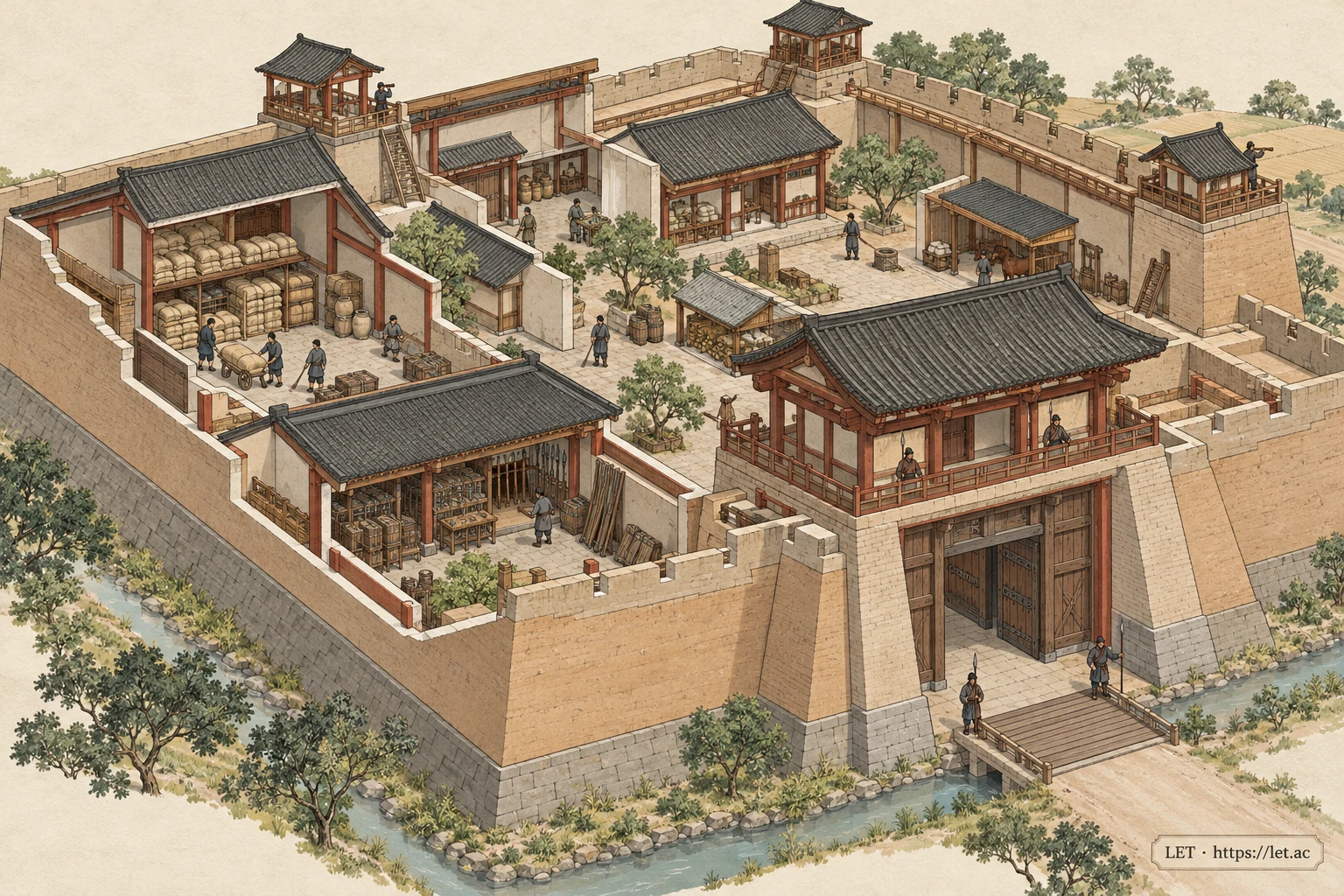
Sun Tzu asks how a force can prepare for security, recognize an opportunity, and enter battle with its advantages already established. This complete fourth chapter explores quiet competence, measured readiness, and the difference between preparing conditions and commanding an outcome, with bilingual readings and a fictional library move.
01 / A reading of the text, with context.
1. Prepare your position; recognize what lies beyond it
Sun Tzu says: In earlier times, those skilled in warfare first put themselves beyond defeat and waited for the enemy to become vulnerable to defeat. Security against defeat depends on oneself; the possibility of defeating the enemy depends on the enemy. Thus a skilled commander can establish security against defeat, but cannot make the enemy certain to be defeated. Hence the saying: victory can be recognized, but cannot be made to happen at will.
02 / A reading of the text, with context.
2. Match the action to the conditions
Security against defeat belongs to defense; the possibility of defeating the enemy belongs to attack. One defends when the means for victory are insufficient, and attacks when they are more than sufficient. A skilled defender conceals the force below the nine depths of earth; a skilled attacker moves from above the nine heights of heaven. In this way the force can protect itself and achieve a complete victory.
03 / A reading of the text, with context.
3. Look earlier than the moment everyone notices
To see no more of victory than ordinary people can recognize is not the highest excellence. To win a battle and have everyone praise it is not the highest excellence either. Lifting a fine autumn hair does not show great strength; seeing the sun and moon does not show keen eyesight; hearing thunder does not show sharp hearing.
04 / A reading of the text, with context.
4. Notice the work that makes success look easy
Those called skilled in warfare in earlier times defeated an enemy who was easy to defeat. Their victories brought no reputation for extraordinary wisdom and no celebrated feats of courage. Their victories therefore did not miss the mark. They did not miss because what they put in place was certain to win: they defeated an enemy already in a condition of defeat.
05 / A reading of the text, with context.
5. Establish the conditions before committing to action
Thus those skilled in warfare stand in a position secure against defeat and let no opportunity to defeat the enemy pass. A winning army first establishes the conditions of victory and then seeks battle; a losing army first goes to battle and then seeks a way to win. Those skilled in using an army cultivate their guiding principles and maintain their laws and organization. This enables them to govern the arrangements on which victory and defeat depend.
06 / A reading of the text, with context.
6. Make readiness visible through measurement and comparison
The methods of war are: first, measurement; second, assessment of capacity; third, numerical reckoning; fourth, weighing the two sides against one another; fifth, judging victory. Terrain gives rise to measurement; measurement gives rise to assessment of capacity; capacity gives rise to numbers; numbers give rise to comparison; comparison gives rise to the judgment of victory. A winning army is like a heavy yi weighed against a small zhu; a losing army is like a zhu weighed against a yi. When a winning commander sends the troops into battle, it is like releasing accumulated water into a gorge a thousand ren deep. Such is military disposition.
PAUSE & CONSIDER
Ideas to keep
- Strengthen the conditions you can prepare, and name those that depend on other people or events.
- Choose when to act by checking readiness and opportunity, with time to address missing conditions.
- Notice and credit the quiet work that prevents difficulty before it becomes a crisis.
- Check the prerequisites before committing people and resources to an undertaking.
- Use measurements and comparisons to support judgment, and revisit them when the situation changes.
AN ILLUSTRATIVE MODERN SCENARIO
A community library move: an illustrative fictional scenario
A community library is moving its collection to a new building. Volunteers are ready to pack, but the librarian pauses to define the task: every box should arrive with a usable record, books should be findable during unpacking, and the move should leave workable routes for people. The team identifies what it can prepare directly—labels, inventory, assignments, and a plan of the new shelves—and what requires confirmation from others, including access to the destination and the vehicle's arrival.
Before packing the whole collection, the team tries one small batch. Each box receives a unique number linked to the old shelf and intended new shelf. The digital inventory is backed up to a second agreed location, and a paper box list stays with the librarian. A volunteer retrieves the backup and uses it to find a sample book. The rehearsal reveals a duplicated shelf label and a doorway where a loaded cart cannot make the planned turn. They correct the label and change the route while the books are still easy to reach.
The new building's custodian confirms which rooms will be available and marks a covered temporary holding area. The team checks the shelf layout against the number of boxes and agrees on separate places for arrivals, unpacking, and books already shelved. People carrying boxes can see where to go, while other visitors have a clear entrance. The librarian assigns a person to maintain the box register and another to confirm locations as boxes arrive. They agree that packing will wait if receiving space or access is still unresolved.
On moving day, the vehicle arrives later than expected and rain changes the unloading arrangement. The team uses the agreed holding area, updates the register, and unpacks a smaller batch first. One box needs its destination corrected; its number lets the receiving volunteer trace it without searching every pile. The collection is eventually put in its intended places, and the librarian checks a sample against the inventory. The preparations support the response to changes. The outcome still depends on people noticing errors, communicating, and adjusting the plan.
孙子从先求不败讲起,区分自己能够准备的条件与敌方是否出现机会,再讨论不显眼的善战、先胜后战,以及度量比较。本篇收录第四篇完整原文,配有英文译写、白话解释、双语解读和一个虚构的社区图书馆搬迁案例。
01 / 把原文放回语境,慢慢读。
一、先做好自己,也看清条件的边界
孙子说:从前善于作战的人,先使自己具备不被打败的条件,再等待敌人出现可以被打败的条件。使自己不被打败,主要在于自己;敌人是否可以被打败,则在于敌人。因此,善战者能够做好不败的准备,却不能强使敌人一定出现可败的条件。所以说:有利于取胜的形势可以判断,却不能凭自己的意愿强行造成。
02 / 把原文放回语境,慢慢读。
二、让行动方式与具备的条件相称
使自己不被打败,要靠防守;抓住敌人可以被打败的条件,要用进攻。取胜条件还不充分时守,条件已经充分时攻。善于防守的人,把自己藏得像在九地之下那样深密;善于进攻的人,行动像来自九天之上那样迅速难测,因此能够保全自己,并取得完整的胜利。
03 / 把原文放回语境,慢慢读。
三、在人人都看见之前,先察觉条件
对于取胜的认识,如果不超过一般人已经知道的,就还不算高明中的高明;打赢了以后,天下人都称赞善战,也还不算高明中的高明。举起一根细小的秋毫,不足以说明力气大;看见日月,不足以说明眼力好;听见雷声,不足以说明耳朵灵敏。
04 / 把原文放回语境,慢慢读。
四、看见让结果显得轻松的准备
从前所谓善于作战的人,战胜的是已经容易被战胜的敌人。因此,他们取胜时,没有显赫的智谋名声,也没有惊人的勇武功绩。他们取胜不会发生差错,是因为所作的部署已经具备取胜的条件,战胜的是本已处于败势的敌人。
05 / 把原文放回语境,慢慢读。
五、先形成条件,再投入行动
所以,善战者使自己处在不易被打败的位置,也不错过敌人出现败势的机会。能取胜的军队,先形成取胜条件,再寻求交战;失败的军队,却先投入交战,然后才寻找取胜的办法。善于用兵的人修明原则,保持法令与制度的落实,因此能够掌握关系胜败的治理与部署。
06 / 把原文放回语境,慢慢读。
六、用度量与比较,把准备变得可核查
用兵的方法,第一是度察,第二是估量,第三是计算,第四是比较轻重,第五是判断胜负。地形引出度察,度察引出容量与条件的估量,估量引出数量,数量引出双方实力的比较,比较引出胜负的判断。因此,能取胜的军队,好比用较重的镒去称较轻的铢;失败的军队,则好比用铢去称镒。胜者指挥士卒作战,如同把积蓄的水放入千仞深的溪谷;这就是有利的军形。
停下来,想一想
记住这些要点
- 把自己能准备的条件做扎实,也明确哪些条件依赖他人或外部变化。
- 依据准备与机会决定何时行动,给补足缺口留下时间。
- 看见并承认那些提前减少困难、避免临时救急的日常工作。
- 把人力与资源投入行动之前,先核实所需的前提条件。
- 用度量与比较支持判断,情况变化时重新核查。
现代情境示例 · 虚构案例
社区图书馆搬迁:虚构的说明案例
一所社区图书馆要把藏书搬到新楼。志愿者已经准备装箱,馆员先停下来明确任务:每箱到达时都有能用的记录,拆箱过程中仍能找到需要的书,人员进出与搬运有可走的路线。团队列出自己能直接准备的事项:标签、清单、分工、新址书架布局;也列出需要他人确认的事项,包括新址的进入安排和车辆到达时间。
全面装箱前,团队先试搬一小批。每箱使用唯一编号,对应原来的书架和新址计划存放处。电子清单备份到另一处约定位置,馆员另留一份纸面箱号表。志愿者试着取回备份,再据此找到一本样书。演练发现一处书架编号重复,还有一道门让装满的推车转不过去。趁书还容易查找,大家先修正标签,再调整路线。
新楼的管理人确认哪些房间可以使用,并标出有顶的临时存放区。团队按箱子数量核对书架布局,分别安排接收、拆箱和已上架的位置。搬箱的人知道往哪里走,其他访客也有清楚的入口。馆员指定一人维护箱号登记,另一人在箱子到达时确认位置。大家还约定:如果接收空间或进入安排没有落实,就先不把整批藏书封箱待运。
搬迁当天,车辆比预定晚到,下雨也改变了卸货安排。团队使用约定的临时存放区,更新登记,先拆较小的一批。一个箱子的目的位置需要更正;接收者凭箱号就能追查,不必翻找所有箱堆。最后,藏书放到计划位置,馆员按清单抽查。此前的准备帮助团队应对变化,结果仍依赖大家看见错误、沟通并调整办法。
Original Chinese & source
FULL ORIGINAL · TRADITIONAL CHINESE
軍形第四
孫子曰:昔之善戰者,先為不可勝,以待敵之可勝。不可勝在己,可勝在敵。故善戰者,能為不可勝,不能使敵之必可勝。故曰:勝可知,而不可為。
不可勝者,守也;可勝者,攻也。守則不足,攻則有餘。善守者,藏於九地之下;善攻者,動於九天之上,故能自保而全勝也。
見勝不過衆人之所知,非善之善者也;戰勝而天下曰善,非善之善者也。故舉秋毫不為多力,見日月不為明目,聞雷霆不為聰耳。
古之所謂善戰者,勝於易勝者也。故善戰者之勝也,無智名,無勇功。故其戰勝不忒。不忒者,其所措必勝,勝已敗者也。
故善戰者,立於不敗之地,而不失敵之敗也。是故勝兵先勝而後求戰,敗兵先戰而後求勝。善用兵者,修道而保法,故能為勝敗之政。
兵法:一曰度,二曰量,三曰數,四曰稱,五曰勝。地生度,度生量,量生數,數生稱,稱生勝。故勝兵若以鎰稱銖,敗兵若以銖稱鎰。勝者之戰民也,若決積水於千仞之溪者,形也。
The complete traditional Chinese text follows Wikisource’s online transcription of 軍形第四, revision 7906064, checked on October 12, 2026. The source has five paragraphs; LET divides the fourth into two reading sections, making six sections in total. Traditional commentaries were consulted for difficult terms. This is a reading edition, not a comparison of manuscript variants.
English rendering, modern Chinese paraphrase, and commentary were written independently by LET with AI assistance from the Chinese text. They are editorial interpretations, separate from the quoted original. The library move is fictional and is not attributed to Sun Tzu. Its cooperative applications are LET’s analogies, distinct from the original military setting and claims.