THE ART OF WAR CHAPTER 06
Weak Points and Strong
虚实篇
Read the actual conditions, concentrate your effort, and change the arrangement when they change.
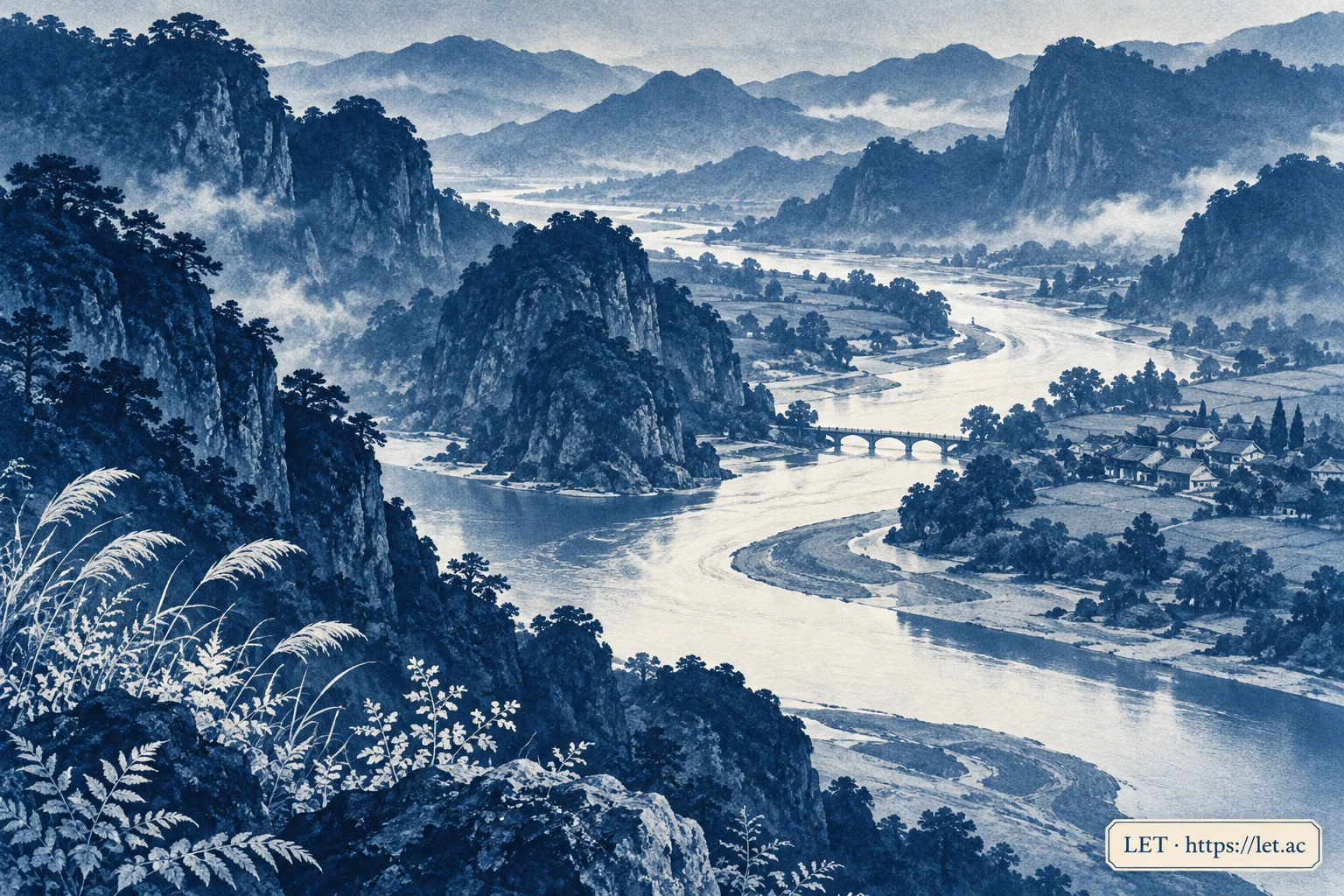
Sun Tzu examines initiative, concealment, concentration, timing, and a force's changing relationship with its opponent. The chapter ends with water finding its course through the terrain. Read the complete sixth chapter with independent English, modern Chinese, bilingual commentary, and a fictional exhibition that responds to visitors and its venue.
01 / A reading of the text, with context.
1. Be ready before the demands arrive
Sun Tzu says: Those who arrive at the battlefield first and wait for the enemy are rested; those who arrive later and hurry into battle are weary. Thus those skilled in warfare bring the enemy to them, rather than being brought to the enemy.
02 / A reading of the text, with context.
2. Understand how actions change what must be answered
To make the enemy come of their own accord, offer them an advantage; to prevent their coming, threaten them with harm. Thus an enemy who is rested can be made weary, one who is well fed can be made hungry, and one who is settled can be made to move. Appear where the enemy does not hurry to respond; hurry to where they do not expect you.
03 / A reading of the text, with context.
3. Distinguish a force's presence from what the enemy can read
To march a thousand li without wearing out the force is to travel through ground without an opposing force. An attack certain to take its objective strikes what the enemy does not defend; a defense certain to hold secures what the enemy does not attack. Thus, against a skilled attacker, the enemy does not know where to defend; against a skilled defender, the enemy does not know where to attack. How subtle, how subtle—to the point of no discernible form! How extraordinary, how extraordinary—to the point of no discernible sound! In this way one can hold the enemy's fate in one's keeping.
04 / A reading of the text, with context.
4. Ask what makes an encounter happen—or keeps it from happening
An advance that cannot be resisted strikes the enemy's unprepared point; a withdrawal that cannot be pursued is too swift to be caught. When I wish to fight, even an enemy behind high walls and deep ditches must fight me if I attack what they are bound to rescue. When I do not wish to fight, even if I defend only a line drawn on the ground, the enemy cannot engage me if I turn them away from their intended course.
05 / A reading of the text, with context.
5. Count the strength available at the actual point of action
If I draw out the enemy's disposition while my own remains undisclosed, I can concentrate while the enemy divides. I keep my force as one; the enemy divides into ten parts. Thus I bring ten parts against one, so that I am numerous and the enemy few. When I can use many against few, the force I actually face is small. The place where I will fight must not be known to the enemy. If it is unknown, the enemy must prepare in many places; the more places they prepare, the fewer troops I meet at the point of battle. Prepare the front and the rear is thin; prepare the rear and the front is thin. Prepare the left and the right is thin; prepare the right and the left is thin. Prepare everywhere and everywhere is thin. Those who become few are those preparing against another; those who become many are those who make another prepare against them.
06 / A reading of the text, with context.
6. Coordinate the place and time, not only the head count
Know the place of battle and the day of battle, and forces can converge to fight even from a thousand li away. Without knowing the place or day, the left cannot aid the right, the right cannot aid the left, the front cannot aid the rear, and the rear cannot aid the front. How much less can they help when the distant units are tens of li apart and even the nearby ones several li away! In my judgment, even if Yue's troops are numerous, what advantage does that give them in deciding victory or defeat? Thus I say: victory can be brought within one's grasp. Although the enemy is numerous, they can be made unable to fight as a force.
07 / A reading of the text, with context.
7. Use observation to discover the actual strengths and gaps
Assess the enemy to understand the gains and losses in their plans. Stir them into action to understand the pattern of their movement and stillness. Draw out their disposition to understand which positions lead to survival or destruction. Compare their strength to discover where they have more than enough and where they are lacking.
08 / A reading of the text, with context.
8. Understand why an arrangement worked before repeating it
The highest achievement in arranging a force is to reach a point where its disposition cannot be discerned. When it cannot be discerned, even a deeply placed spy cannot uncover it, and a wise opponent cannot plan against it. I arrange victory in response to the enemy's disposition, but the many who witness it cannot understand how. Everyone knows the form through which I won, yet no one knows the form through which I brought that victory about. Thus the arrangement that wins a battle is not simply repeated; it responds to changing dispositions without limit.
09 / A reading of the text, with context.
9. Let the changing conditions shape the response
An army's disposition resembles water. Water's movement avoids high ground and seeks the low; an army's victory comes from avoiding strength and striking an unprepared point. Water shapes its course according to the ground; an army shapes its victory according to the enemy. Thus an army has no permanently settled configuration and no constant form. Those who can win by changing in response to the enemy are called extraordinary. The five phases have no permanent victor; the four seasons have no fixed place. Daylight has periods of greater and lesser length, and the moon wanes and waxes.
PAUSE & CONSIDER
Ideas to keep
- Prepare enough to make a considered response when the real demands arrive.
- Judge available capacity at the place and time it is needed, rather than from a total alone.
- Coordinate routes, timing, and roles so that people can support one another.
- Use agreed observation and voluntary feedback to discover where an arrangement works or fails.
- Keep the purpose clear while changing the arrangement in response to new conditions.
AN ILLUSTRATIVE MODERN SCENARIO
A small charity exhibition: an illustrative fictional scenario
A small volunteer team is preparing a charity exhibition about local craft. It plans a tidy loop through a borrowed hall, with an information desk at the entrance and a volunteer beside every display. Before opening, the team agrees on its purpose: let visitors understand the work, meet the makers if they choose, and move around the room comfortably. A walkthrough reveals that the imagined loop does not fit the room. The entrance is narrow, two display stands create a tight turn, and the room's clearest sightline points toward a different first exhibit.
With the venue coordinator's agreement, the team moves the desk away from the doorway and rearranges the two stands. Signs show both a short route and a longer route. During the first visiting period, volunteers openly observe where people pause and invite visitors to give brief feedback. Some want an overview before reading individual labels; others prefer to speak with a maker after seeing the process display. The team asks whether the labels and routes are clear, rather than trying to persuade visitors to follow a preferred path.
The counts and interviews show that the process display needs more explanation at busy times, while several other displays are easy to explore independently. The team keeps necessary coverage and places an additional helper near the process display during group arrivals. Volunteers receive a common plan showing roles, arrival times, and how to request support. They agree a separate delivery period for supplies so that boxes do not cross the entrance during a visit. Help is concentrated according to observed need, with a way to move it when that need changes.
Later, rain brings more visitors into the hall at once. The team uses the feedback process again: it briefly opens a wider waiting space, explains the changed route, and checks that the makers and volunteers can still work comfortably. The short route now helps visitors who have less time. At the end, the team records which adjustments helped and which need another trial. Its notes include the room dimensions and visiting pattern, so the next exhibition can understand why this layout was useful instead of copying it blindly into a different venue.
孙子从先到与后到的劳逸讲起,讨论主动、隐蔽、聚散、时地协调与观察,最后以水随地形而流比喻军队随敌变化。本篇收录第六篇完整原文,配有独立英文译写、白话解释、双语解读,以及根据观众反馈与场地条件调整的虚构公益展览案例。
01 / 把原文放回语境,慢慢读。
一、在需要应对之前,先具备准备
孙子说:先到战场等待敌人的一方,能够从容休整;后到战场又急着投入作战的一方,就会疲劳。因此,善战者使敌人来到自己安排的条件中,而不被敌人牵着去应战。
02 / 把原文放回语境,慢慢读。
二、看见行动怎样改变对方必须应对的事情
能够使敌人自行来到,是因为用利益引它;能够使敌人不能来到,是因为用损害牵制它。因此,敌人安逸时可以使它疲劳,饱足时可以使它饥饿,安稳时可以使它移动。出现在敌人不赶来应对的地方,奔向它没有预料的地方。
03 / 把原文放回语境,慢慢读。
三、区分实际存在的力量与敌人能看明白的形迹
行军千里而不使部队疲惫,是因为经过没有敌军阻碍的地方。进攻能够取胜,是因为攻向敌人没有守备之处;防守能够稳固,是因为守住敌人没有进攻之处。所以,善于进攻的人使敌人不知道该守哪里,善于防守的人使敌人不知道该攻哪里。微妙啊,微妙到让敌人看不出形迹;神妙啊,神妙到让敌人听不出声息,因此能够掌握敌人的命运。
04 / 把原文放回语境,慢慢读。
四、判断交战为何发生,也为何能够避免
前进而不能被抵挡,是因为冲向敌人空虚之处;后退而不能被追上,是因为迅速到让对方来不及。若我想交战,敌人即使据有高垒深沟,也不得不出来,是因为我攻击了它必须救援的地方;若我不想交战,即使只划地作为防守范围,敌人也无法与我交战,是因为我改变、阻碍了它原来要走的方向。
05 / 把原文放回语境,慢慢读。
五、看行动地点真正能用的力量
使敌人的配置显露出来,而本方的配置不让它看透,就能使本方集中、敌方分散。本方集中为一体,敌方分成十处,就可以用全部十分的力量攻击对方的一分,于是本方在交战处多,敌方在交战处少。能够以多对少,实际面对的敌军就有限。交战地点不能让敌人知道;不知道,它要准备的地方就多;准备地方多,我在交战处遇到的敌军就少。准备前面,后面就少;准备后面,前面就少;准备左边,右边就少;准备右边,左边就少。无处不准备,就无处不兵力稀薄。兵力变少,是因为分散防备对方;兵力变多,是因为使对方分散来防备自己。
06 / 把原文放回语境,慢慢读。
六、不只数人数,还要协调地点与时间
知道交战地点,也知道交战日期,即使相距千里,也能会合交战。不知道地点和日期,左边就无法救援右边,右边无法救援左边,前面无法救援后面,后面无法救援前面;何况远处相隔几十里,近处也相隔几里!按照我的估量,越国军队即使人数多,对决定胜败又有什么帮助呢?所以说:取胜可以谋求掌握。敌人虽多,也可以使它无法合力作战。
07 / 把原文放回语境,慢慢读。
七、用观察辨明实际优势与缺口
因此,分析敌方,了解它谋划的得失;使它作出行动,了解它动静的规律;使它的配置显露,了解哪些位置有利于生存,哪些会导致覆败;比较它的力量,了解哪里充足,哪里不足。
08 / 把原文放回语境,慢慢读。
八、先明白安排为何有效,再考虑是否沿用
安排军队形势的极致,是让敌人看不出可以据以判断的配置。看不出配置,深入探查的间谍也无法窥明,有智慧的对手也难以谋划应对。依据敌人的形势部署取胜,众人却不了解其中原因。人们都知道我取胜时显现的形迹,却不知道我怎样因势形成这场胜利。因此,取胜的安排不只是重复旧样,而是不断应对变化的形势。
09 / 把原文放回语境,慢慢读。
九、像水依地而流,让回应随条件变化
军队的配置像水。水流避开高处,趋向低处;用兵取胜,则避开敌方充实之处,攻击空虚之处。水依地形决定流向,军队依敌情决定取胜的办法。因此,军队没有永远固定的态势,也没有恒定不变的配置;能够随敌情变化而取胜,才称得上神妙。五行没有永远占上风的一方,四季不总停在同一位置,白昼有长短,月亮有亏盈。
停下来,想一想
记住这些要点
- 先做好准备,让实际需求出现时仍有余地判断与回应。
- 在实际需要的地点和时间判断可用能力,不只看总量。
- 协调路线、时间与分工,让人们能够互相支援。
- 通过商定的观察与自愿反馈,发现安排在哪里有效、在哪里出现问题。
- 保持目标清楚,也随新条件改变具体安排。
现代情境示例 · 虚构案例
小型公益展览:虚构的说明案例
一支小型志愿团队准备举办介绍本地手艺的公益展览。最初想在借来的大厅里排出整齐环线,入口放问讯桌,每件展品旁都站一位志愿者。开场前,大家商定目的:帮助观众理解作品,自愿与制作者交流,并能从容在房间里走动。一次试走发现,想象的环线并不适合场地:入口狭窄,两处展架形成急转弯,房间里最清楚的视线却指向另一件适合先看的展品。
征得场地协调人的同意后,团队把问讯桌移离门口,调整两处展架,用标识说明短路线与长路线。在第一轮参观时,志愿者公开观察人们停留的位置,并邀请观众自愿提供简短反馈。有些人希望先看总览再读单件标签,有些人则想看完工序展示后再与制作者交谈。团队询问标签和路线是否清楚,依据回答改善参观,不把劝大家走指定路线当成目标。
停留记录与访谈表明,忙时的工序展示更需要讲解,而另外几处展品可以较方便地自行观看。团队保留必要岗位,在团体到访时段给工序展示增加一位协助者。志愿者共享分工、到访时间和请求支援的办法,也另行商定物资送入时段,避免参观时让箱子穿过入口。协助依据实际需求集中,同时保留需求变化时再调整的办法。
后来下雨,更多观众同时进入大厅。团队再次使用反馈办法:临时留出更宽的等候区,说明路线变化,也查看制作者和志愿者是否仍能从容工作。时间较少的观众可以选择短路线。结束后,大家记录哪些调整有帮助,哪些还要再试,并保留房间尺寸与到访规律。下次展览就能理解这次布局为何适用,再按新场地考虑,而不只照抄摆放样子。
Original Chinese & source
FULL ORIGINAL · TRADITIONAL CHINESE
虛實第六
孫子曰:凡先處戰地而待敵者佚,後處戰地而趨戰者勞。故善戰者,致人而不致於人。
能使敵自至者,利之也;能使敵不得至者,害之也。故敵佚能勞之,飽能饑之,安能動之。出其所不趨,趨其所不意。
行千里而不勞者,行於無人之地也。攻而必取者,攻其所不守也;守而必固者,守其所不攻也。故善攻者,敵不知其所守;善守者,敵不知其所攻。微乎微乎!至于無形;神乎神乎!至于無聲,故能為敵之司命。
進而不可禦者,沖其虛也;退而不可追者,速而不可及也。故我欲戰,敵雖高壘深溝,不得不與我戰者,攻其所必救也;我不欲戰,雖畫地而守之,敵不得與我戰者,乖其所之也。
故形人而我無形,則我專而敵分。我專為一,敵分為十,是以十攻其一也,則我衆而敵寡。能以衆擊寡者,則吾之所與戰者,約矣。吾所與戰之地不可知,不可知,則敵所備者多,敵所備者多,則吾之所與戰者寡矣。故備前則後寡,備後則前寡,備左則右寡,備右則左寡,無所不備,則無所不寡。寡者,備人者也;衆者,使人備己者也。
故知戰之地,知戰之日,則可千里而會戰;不知戰之地,不知戰之日,則左不能救右,右不能救左,前不能救後,後不能救前,而況遠者數十里,近者數里乎!以吾度之,越人之兵雖多,亦奚益於勝敗哉!故曰:勝可擅也。敵雖衆,可使無鬥。
故策之而知得失之計,作之而知動靜之理,形之而知死生之地,角之而知有餘不足之處。
故形兵之極,至於無形。無形,則深間不能窺,智者不能謀。因形而措勝於衆,衆不能知。人皆知我所以勝之形,而莫知吾所以制勝之形。故其戰勝不復,而應形於無窮。
夫兵形象水,水之行,避高而趨下;兵之勝,避實而擊虛。水因地而制行,兵因敵而制勝。故兵無成勢,無恒形,能因敵變化而取勝者,謂之神。故五行無常勝,四時無常位,日有短長,月有死生。
The complete traditional Chinese text follows Wikisource’s online transcription of 虛實第六, revision 7906064, checked on October 12, 2026. LET divides the source’s seventh paragraph into two, producing nine reading sections from eight source paragraphs. The source reads 勝可擅也 and notes 為 as a variant; this edition quotes 擅. Traditional annotations informed difficult terms. This is a reading edition, not a comparison of manuscript variants.
English rendering, modern Chinese paraphrase, and commentary were written independently by LET with AI assistance from the Chinese text. They are editorial interpretations, separate from the quoted original. The charity exhibition is fictional and is not attributed to Sun Tzu. Its cooperative applications use consent, communication, and feedback; they are LET’s analogies, distinct from the original military proposals and confident claims.