THE ART OF WAR CHAPTER 07
Maneuvering
军争篇
The best route is measured by what arrives, and in what condition.
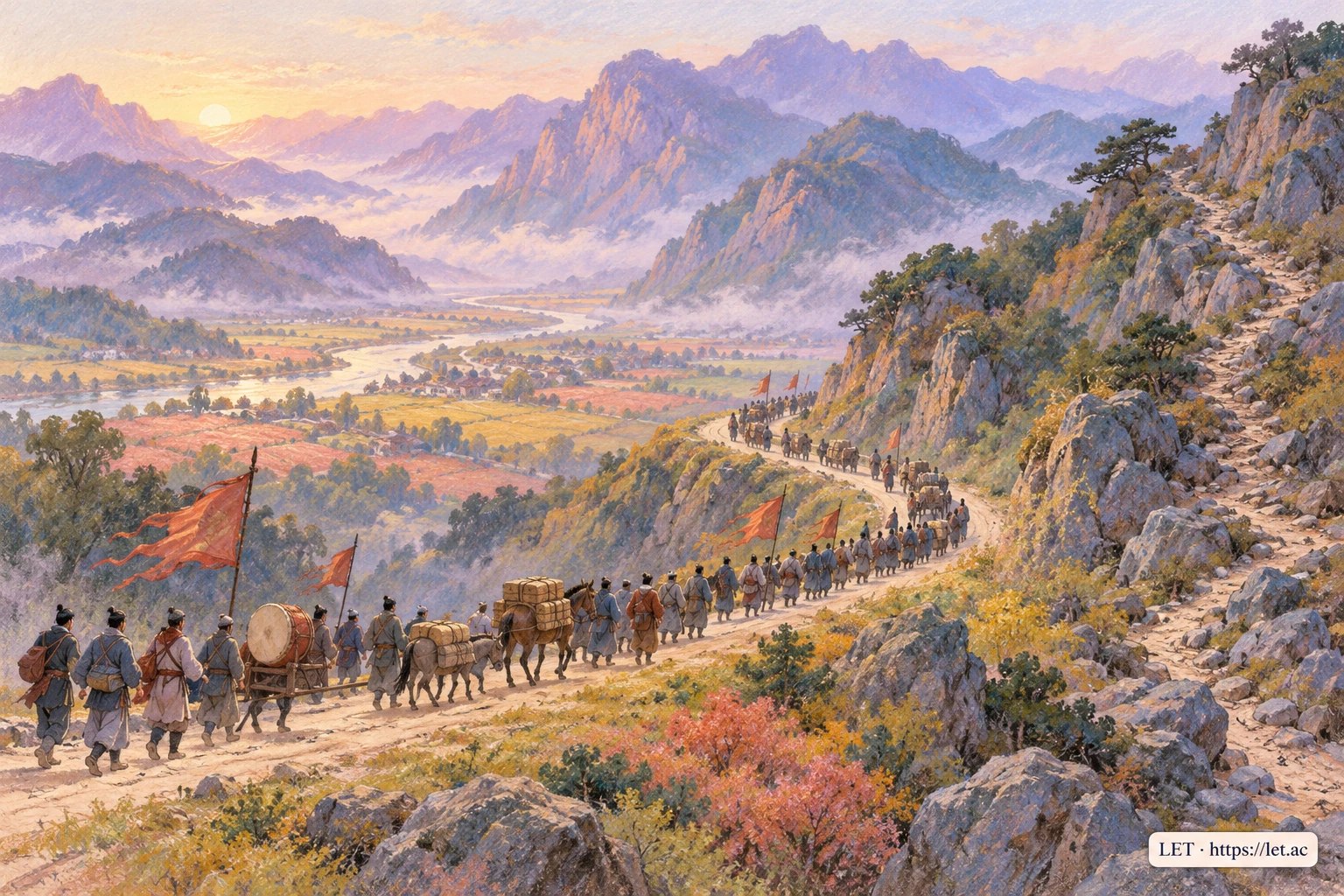
Sun Tzu examines the difficulty of gaining an advantage while moving: indirect routes, the cost of forced speed, supplies, shared signals, and changing morale. Read the complete seventh chapter with independent English, modern Chinese, bilingual commentary, and a fictional community walk that learns to move as a group.
01 / A reading of the text, with context.
1. Make the route serve the objective
Sun Tzu says: In the use of an army, the commander receives orders from the ruler, assembles the army and gathers its troops, and encamps facing the opposing force. Nothing is harder than contending for an advantage. The difficulty lies in making the roundabout direct and turning adversity into advantage. Thus take a roundabout course and draw the enemy aside with an offered advantage; depart after them yet arrive before them. This is understanding the calculation of indirect and direct routes.
02 / A reading of the text, with context.
2. Count what forced speed leaves behind
Contending for advantage can therefore bring benefit, and it can bring danger. Move the whole army and its belongings to seize an advantage, and it may arrive too late; leave the slower parts behind to race for it, and the baggage may be lost. If troops bundle their armor and hurry, stop neither day nor night, and cover double stages without rest to contest an advantage a hundred li away, the commanders of the three divisions will be captured. The strong arrive first, the tired fall behind; by this reckoning only one in ten arrives. Contest it at fifty li, and the leading division's commander will be defeated; only half arrive. Contest it at thirty li, and two-thirds arrive. Thus an army without its baggage is lost, without food is lost, and without accumulated stores is lost.
03 / A reading of the text, with context.
3. Learn what the map cannot tell you alone
Therefore, without knowing other rulers' plans, one cannot establish alliances in advance. Without knowing the form of mountains and forests, difficult ground, obstacles, marshes, and wetlands, one cannot move an army. Without using local guides, one cannot gain the advantages of the terrain.
04 / A reading of the text, with context.
4. Change pace with a reason
Thus an army establishes its position through deception, moves for advantage, and adapts through dispersing and joining its forces. Be swift as wind, measured as a forest, fierce as fire when invading and raiding, immovable as a mountain, difficult to discern as darkness, and sudden in action as thunder. When raiding settlements, divide the troops; when expanding territory, distribute the gains. Weigh the balance before moving. Those who understand the calculation of indirect and direct routes beforehand will win. This is the method of maneuvering for advantage.
06 / A reading of the text, with context.
6. Notice changes in energy and judgment
An army can be deprived of its fighting spirit, and a commander can be deprived of composure. Thus spirit is sharp in the morning, slack at midday, and turns toward home by evening. Those skilled in using an army avoid the enemy's sharp spirit and strike when it has grown slack and is thinking of return. This is managing spirit. Meet disorder with order and clamor with calm. This is managing the mind.
07 / A reading of the text, with context.
7. Preserve capacity and recognize a changed situation
Wait nearby for an enemy coming from afar, rested for an enemy who is tired, and fed for an enemy who is hungry. This is managing strength. Do not intercept an enemy whose banners are in good order, and do not attack a formation that stands imposing and organized. This is managing change.
08 / A reading of the text, with context.
8. Recognize when pressing harder creates danger
Thus in using an army, do not attack uphill against an enemy on high ground; do not meet head-on an enemy with a hill behind it. Do not follow a feigned retreat; do not attack troops at the height of their vigor. Do not swallow a force offered as bait. Do not block an army returning home. When surrounding an army, leave a gap. Do not press an enemy with no way out. These are methods of using an army.
PAUSE & CONSIDER
Ideas to keep
- Compare routes by the objective, the conditions, and the group's state on arrival.
- Include slower participants and needed supplies in the timetable before asking for speed.
- Combine maps with direct observation and knowledge of the place.
- Agree signals that reach everyone, and change the pace deliberately as conditions change.
- Preserve capacity, reassess the goal, and retain a workable way to shorten or end the task.
AN ILLUSTRATIVE MODERN SCENARIO
A community walk: an illustrative fictional scenario
A community group plans a walk to a hillside lookout and back to its meeting point. The map shows a direct path up a ridge and a longer path winding along a gentle slope. The first draft follows the shorter line and sets an arrival time based on the fastest organizer's solo walk. A volunteer familiar with the area points out that the ridge path has steps and little room for the whole group to wait together. The group wants a shared outing, so arriving as a workable group becomes part of the objective.
The organizers inspect both paths with that volunteer and choose the winding route for this outing. They send everyone the same map, meeting time, and planned regrouping points. The timetable includes the group's expected pace and time to stop together. Each person knows what they are expected to carry; the organizers check where shared supplies will be and who is responsible for them. They remove an optional extra loop instead of making the schedule depend on continuous rushing.
A lead walker and a rear volunteer agree how to signal a pause and confirm that the message has reached both ends. At a junction, the lead waits while the rear volunteer brings the group together; nobody follows a quicker walker onto a different path. At the first regrouping point, a delay makes some participants impatient. The coordinator explains the next stage, checks whether the agreed pace still suits the group, and gives people time to use their supplies. Clear information and a shared pause reduce the urge for separate, hurried decisions.
Later, the group is moving more slowly than expected. Rather than urging everyone to make up the delay, the organizers discuss the shorter return option already marked on the shared map. Participants agree to finish at a nearer viewpoint and take that return route. The lead and rear volunteers check the group together before leaving the junction. The outing ends with time for everyone to return to the meeting point and collect their belongings.
After the fictional walk, the organizers revise the route notes. They record which meeting points worked, what made instructions hard to hear, and why the original timing was too optimistic. The useful outcome is a shared outing and better knowledge for the next plan. Reaching the farthest lookout has not become the only measure of success. A longer outward path and a shortened destination can both serve the agreed purpose when the decisions follow actual conditions.
军争篇讨论移动中争取有利条件的困难:道路的迂直、强行求快的代价、辎重补给、共同信号,以及士气与力量的变化。本篇收录完整原文,配独立英文译写、白话解释、双语解读与一个社区徒步的虚构案例。
01 / 把原文放回语境,慢慢读。
一、让道路服务于目标
孙子说:用兵时,将领接受君主命令,集结军队,聚合士卒,与敌方相对驻营,其中最难的是争取有利条件。军争的难处,在于把迂远变成便利,把不利转成有利。因此,使道路呈现迂远之势,再用利益诱动敌方,虽然出发在后,却能抵达在先,这就是懂得迂直的谋划。
02 / 把原文放回语境,慢慢读。
二、看强行求快会落下什么
所以,争取有利条件既能带来利益,也能带来危险。把全军连同物资都带着赶路,可能来不及;丢下迟重部分,只顾轻装争先,辎重又可能被抛失。因此,卷起甲具急进,昼夜不休,加倍赶路,奔赴百里外争利,就会使三军将领被擒。强健者先到,疲惫者落后,按这种估量,十人只有一人到达。赶五十里争利,前军将领会遭挫败,只有一半人到;赶三十里争利,有三分之二人到。所以,军队没有辎重、没有粮食、没有储备物资,都会走向败亡。
03 / 把原文放回语境,慢慢读。
三、补上地图独自不能告诉你的事
所以,不了解其他诸侯的谋划,就不能预先结交;不了解山林、险阻、湿地沼泽的地形,就不能行军;不用熟悉当地的人引路,就不能取得地势带来的便利。
04 / 把原文放回语境,慢慢读。
四、动与静,都要有判断
因此,用兵以欺敌建立有利条件,因有利而行动,以兵力的分散与集中作变化。急行时像风,缓行时像整齐的树林,侵袭掠夺时像火,驻守不动时像山,隐蔽难测时像阴暗,行动突发时像雷震。掠取乡邑物资时分兵,拓展土地时分配所得;权衡轻重之后再行动。事先懂得道路迂直的谋划,就能取胜,这就是军争的方法。
06 / 把原文放回语境,慢慢读。
六、看见士气与判断的变化
军队的锐气可以被削弱,将领的心志也可以被扰乱。因此,初时气锐,久后渐怠,到后来便想归去。善于用兵的人,避开敌方锐气,等到它懈怠想归时再击,这是掌握士气;以自己的整治等待对方混乱,以自己的镇静等待对方喧扰,这是掌握心志。
07 / 把原文放回语境,慢慢读。
七、保存力量,也承认情况已变
在近处等待远来的敌方,以休整好的状态等待劳累的敌方,以饱足等待饥饿,这是掌握力量。不拦击旗帜整齐的敌军,不攻击严整强盛的阵势,这是掌握变化。
08 / 把原文放回语境,慢慢读。
八、看见继续逼迫会增加的危险
因此,用兵时,不要仰攻占据高地的敌军,不要正面迎击背靠山丘的敌军;不要追随假装败退的敌军,不要攻击锐气正盛的士卒;不要贪取作为诱饵的兵力;不要截堵归去的军队,包围敌军时应留缺口,不要逼迫走投无路的敌人。这些都是用兵的方法。
停下来,想一想
记住这些要点
- 比较道路时,看目标、条件,也看队伍抵达后的状态。
- 要求加快之前,先把较慢的参与者与必要补给算入时间表。
- 把地图与现场观察、熟悉当地的知识结合起来。
- 约定人人接收得到的信号,随条件变化主动调整节奏。
- 保存力量,重新判断目标,并保留缩短或结束任务的办法。
现代情境示例 · 虚构案例
社区徒步的路线选择:虚构的说明案例
一个社区小组计划走到山坡观景点,再回集合处。地图上,一条路直上山脊,一条较长的路沿缓坡绕行。初稿选择短线,抵达时间也按最快组织者独行的记录估算。熟悉当地的志愿者指出,山脊线有台阶,全队一起等待的空间很少。既然目的是共同出游,队伍能以合适状态一起抵达,也成为目标的一部分。
组织者和这位志愿者走看两条路,为这次活动选定缓坡绕行线。大家收到同一张图、同一个集合时间与约定的重新集合地点。时间表算入队伍的预计步速,以及一起暂停的时间。每个人清楚需要携带什么,组织者也确认共用补给放在哪里、由谁负责。原来的附加绕行段被取消,活动不再依靠持续赶路才能按表进行。
带队者与队尾志愿者先约定暂停信号,以及怎样确认消息已经传到两端。遇到岔路,前方停下,队尾把大家带到一起,没有人跟着走得快的人另换道路。第一次集合时,延迟让一些人着急。协调人说明下一段安排,询问约定步速是否仍合适,也让大家有时间使用携带的补给。清楚的信息与共同暂停,使人不必各自仓促决定。
后来,队伍比预期走得慢。组织者没有催大家把延迟赶回来,而是讨论共同地图上早已标出的较短返程方案。参与者同意在较近的景点结束上行,再走这条回路。离开岔口前,带队与队尾志愿者一起确认人员到齐。活动结束时,大家仍有时间回集合处,取回自己的物品。
虚构活动结束后,组织者修订路线说明,记录哪些集合点合用,哪里不容易听清,以及最初时间为什么过于乐观。所得是一次共同活动,也有下次计划能用的知识。抵达最远观景点,没有成为唯一成功标准。只要依据实际条件判断,较长的去程与缩短的目的地,都能服务于原先约定的目的。
Original Chinese & source
FULL ORIGINAL · TRADITIONAL CHINESE
軍爭第七
孫子曰:凡用兵之法,將受命於君,合軍聚衆,交和而舍,莫難於軍爭。軍爭之難者,以迂為直,以患為利。故迂其途,而誘之以利,後人發,先人至,此知迂直之計者也。
故軍爭為利,軍爭為危。舉軍而爭利,則不及;委軍而爭利,則輜重捐。是故卷甲而趨,日夜不處,倍道兼行,百里而爭利,則擒三軍將,勁者先,疲者後,其法十一而至;五十里而爭利,則蹶上軍將,其法半至;三十里而爭利,則三分之二至。是故軍無輜重則亡,無糧食則亡,無委積則亡。
故不知諸侯之謀者,不能豫交;不知山林、險阻、沮澤之形者,不能行軍;不用鄉導者,不能得地利。
故兵以詐立,以利動,以分合為變者也。故其疾如風,其徐如林,侵掠如火,不動如山,難知如陰,動如雷震。掠鄉分衆,廓地分利,懸權而動。先知迂直之計者勝,此軍爭之法也。
《軍政》曰:「言不相聞,故為金鼓;視不相見,故為旌旗。」夫金鼓旌旗者,所以一民之耳目也。民既專一,則勇者不得獨進,怯者不得獨退,此用衆之法也。故夜戰多金鼓,晝戰多旌旗,所以變人之耳目也。
三軍可奪氣,將軍可奪心。是故朝氣銳,晝氣惰,暮氣歸。故善用兵者,避其銳氣,擊其惰歸,此治氣者也;以治待亂,以靜待嘩,此治心者也;
以近待遠,以佚待勞,以飽待饑,此治力者也;無邀正正之旗,無擊堂堂之陣,此治變者也。
故用兵之法,高陵勿向,背丘勿逆,佯北勿從,銳卒勿攻,餌兵勿食,歸師勿遏,圍師必闕,窮寇勿迫,此用兵之法也。
The complete traditional Chinese text follows Wikisource’s online transcription of 軍爭第七, revision 7906064, checked on October 12, 2026. The eight reading sections are LET’s editorial divisions. Traditional commentaries informed difficult-term interpretations; this is a reading edition, not a comparison of manuscript variants.
English rendering, modern Chinese paraphrase, and commentary were written independently by LET with AI assistance from the Chinese text. They are editorial interpretations, separate from the quoted original. The community walk is fictional and is not attributed to Sun Tzu. Its cooperative applications are LET’s analogies, distinct from the original military proposals.