THE ART OF WAR CHAPTER 09
The Army on the March
行军篇
Observe the ground, examine the signs, and make instructions dependable.
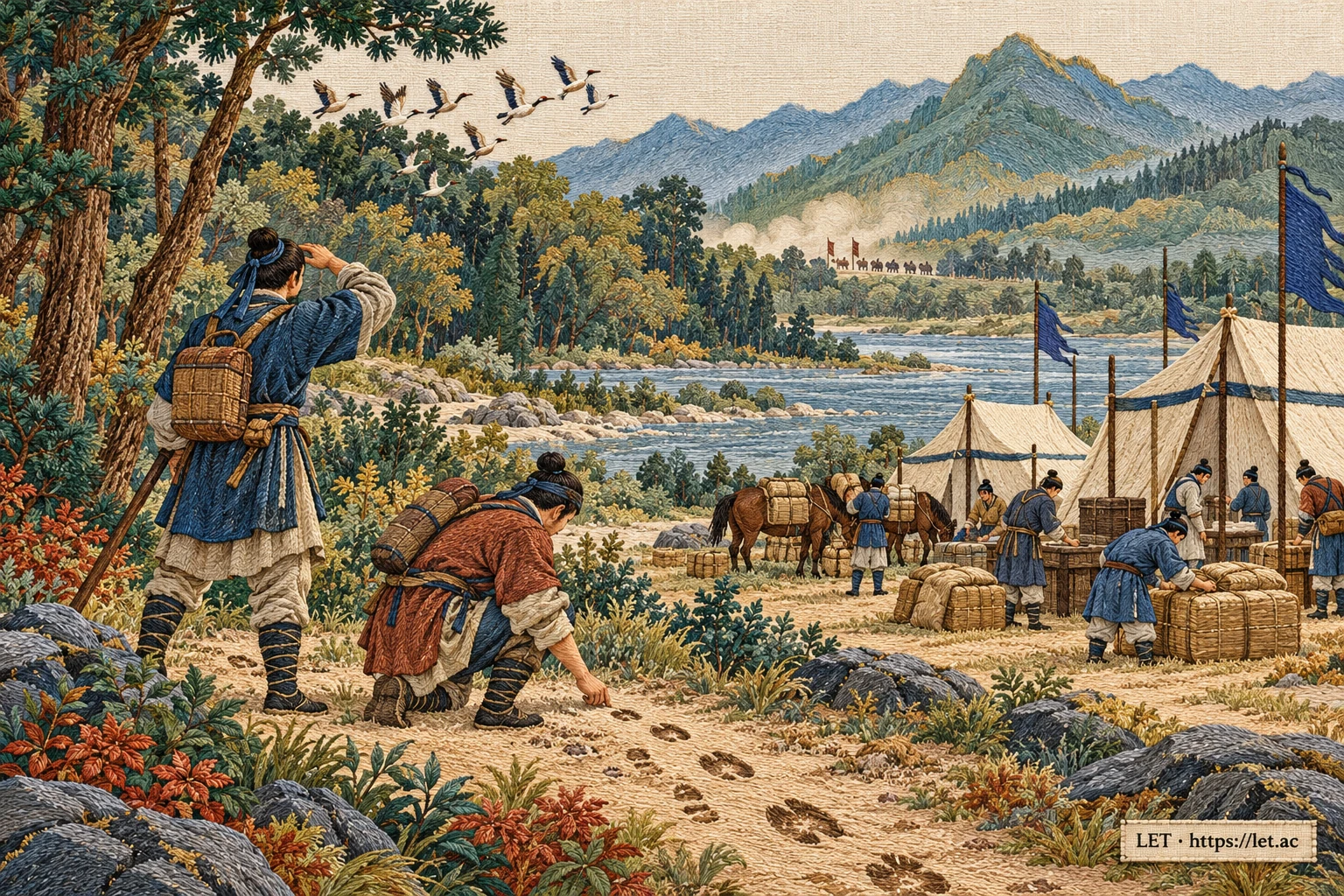
Sun Tzu joins positioning an army with assessing an opponent: mountains, water, difficult ground, visible signs, material strain, and the relationship between trust and discipline. Read the complete ninth chapter with independent English, modern Chinese, bilingual commentary, and a fictional cultural exhibition team that checks what it observes.
01 / A reading of the text, with context.
1. Positioning begins with the ground
Sun Tzu says: In positioning an army and assessing the enemy, when crossing mountains keep near valleys, face the sunny side, and occupy high ground. Do not climb to fight an enemy holding the heights. This is how to position an army in mountains.
02 / A reading of the text, with context.
2. A crossing changes a force's condition
After crossing water, move away from it. When an enemy crosses toward you, do not meet it in the water; let half its force cross and then strike, to gain an advantage. If you want to fight, do not stand close against the water to meet the enemy. Face the sunny side, occupy high ground, and do not position yourself against the flow. This is how to position an army near water.
03 / A reading of the text, with context.
3. Different settings require different arrangements
When crossing salt marshes, pass through quickly and do not remain. If forced to meet an enemy there, keep near water and grass, with trees behind you. This is positioning in salt marshes. On level ground, occupy an easy position, with higher ground to the right and rear, lower ground in front and ground supporting survival behind. This is positioning on level land. The advantages of these four kinds of positioning are how the Yellow Emperor defeated the four rulers.
04 / A reading of the text, with context.
4. Notice what a position supports and conceals
An army generally prefers high ground to low, sunny places to shade, supports life, and occupies sound positions. With the army free from its many maladies, this is called certain victory. At hills and embankments, occupy the sunny side and keep the higher ground to the right and rear; this is an advantage for the army and assistance from the terrain. When rain upstream brings foam down the water, those wishing to cross should wait until it settles. Where there are impassable ravines, natural wells, prisons, nets, traps, or narrow clefts, leave quickly and do not approach. Keep these places away from us and near the enemy; face them ourselves and leave them behind the enemy. Near the army, where there are obstacles, pools and hollows, reeds, woods, or dense cover, search carefully and repeatedly: these are places for ambushes and hidden agents.
05 / A reading of the text, with context.
5. Read visible movement in its setting
An enemy that is near but quiet relies on difficult ground. One that challenges from afar wants us to advance. Occupying easy ground serves its advantage. Many trees moving means an approaching force; numerous screens in the grass are meant to raise doubt. Birds suddenly rising indicate an ambush; startled animals indicate a surprise attack.
06 / A reading of the text, with context.
6. Compare statements with observable arrangements
Dust rising high and sharply means chariots are coming; low and broad dust means infantry. Dust scattered in thin, branching trails means wood gathering; small amounts moving back and forth mean a camp is being established. Humble words alongside increasing preparations mean an advance; forceful words and a show of driving forward mean a retreat. Light chariots coming out first and taking positions at the sides mean a battle formation. A request for peace without prior agreement means a scheme. Troops running to their assigned formation mean a rendezvous is due. Some advancing while others retreat means an attempt to lure us.
07 / A reading of the text, with context.
7. Observe strain without diagnosing people
Soldiers standing supported by their weapons are hungry. Those who draw water and drink first are thirsty. Seeing an advantage but not advancing means fatigue. Birds gathering mean an empty camp. Calls at night mean fear. Disturbance in the army means the commander lacks steadiness or authority. Flags moving out of order mean disorder. Officers' anger means weariness.
08 / A reading of the text, with context.
8. Read escalation as a reason to examine further
Feeding horses with grain and soldiers with meat, leaving no cooking pots hanging in camp, and not returning to their quarters means an enemy driven to desperation. Repeated low, gathered talk and speaking gently to people means the leader has lost the troops' support. Frequent rewards mean straitened circumstances; frequent punishments mean exhaustion. Beginning with harsh violence and then fearing one's own troops means an extreme lack of skill. Coming to submit or apologize means a wish for rest. When armies face each other angrily but remain a long time without joining battle or moving away, examine the situation carefully.
09 / A reading of the text, with context.
9. Numbers need coordination and judgment
Thus an army is not valued simply for increasing its numbers. Do not advance on force alone; it is enough to combine strength, assess the enemy, and make use of people. Those who give no careful thought and treat the enemy lightly will be captured by others.
10 / A reading of the text, with context.
10. Trust and discipline must work together
If soldiers have not yet become attached to their commander and are punished, they will not submit; without submission they are difficult to employ. If soldiers have become attached but punishments are not carried out, they cannot be employed effectively either.
11 / A reading of the text, with context.
11. Make ordinary instructions dependable
Therefore, direct them through humane care and bring them into order through martial discipline; this is called certain success. When instructions are habitually carried out in teaching the people, they comply. When instructions are not habitually carried out, they do not comply. Instructions being habitually effective means the commander and the people work in accord.
PAUSE & CONSIDER
Ideas to keep
- Inspect the actual setting before repeating a familiar arrangement.
- Treat a visible sign as a question to check, not a diagnosis of a person or a certainty about intent.
- Compare statements with arrangements, and ask openly when the two do not match.
- Coordinate the people and resources already available before assuming more people will solve the problem.
- Build trust alongside clear responsibilities and instructions that work in ordinary practice.
AN ILLUSTRATIVE MODERN SCENARIO
A touring cultural exhibition: an illustrative fictional scenario
A community team brings a small exhibition of neighborhood photographs and oral-history transcripts to a borrowed hall. Its previous venue had a wide loading entrance; this one has a narrower door, a paved side passage, and a waiting area shared with another activity. Before moving the display boxes, the arrival lead walks the space with the host. A patch of wet ground blocks their proposed outdoor staging point, so they agree to use the host's available indoor holding area and change the arrival diagram.
People are gathering at the front door, and a volunteer calls repeatedly across the hall. The lead records the observations without deciding that anyone is impatient or confused. Direct questions reveal two separate causes: arriving participants cannot see the registration sign, and the volunteer is trying to locate the person who holds the room keys. With the host's agreement, the team moves the sign into view and identifies a single reception contact. The crowd and calls become information about the process, rather than judgments about the people.
Repeated trips for tape and labels draw attention next. The team checks the inventory and discovers that supplies are stored under an old venue's room name. A volunteer familiar with the host's labels helps reconcile the list. The arrival lead explains the revised holding area and demonstrates how each borrowed display box is checked in before moving to its table. A copy of the same list stays with reception and another with the setup lead. Everyone can see what has arrived and what remains to be brought in.
One box reaches a table before its location is recorded. The agreed process is to pause that box's further movement and check the record, rather than accuse its carrier. The team learns that the location field was hidden on the mobile view of the list. They make the field visible, explain the correction to all the handlers, and complete the record together. The expectation stays clear: borrowed objects need a traceable location. The support needed to meet that expectation is repaired as well.
In this fictional exhibition, the team completes its setup and opens after the host and reception lead confirm the shared entry arrangement. At the end, the same list guides packing and return. The review separates observations, checked explanations, and changes made: wet ground changed the staging point, missing signs changed reception, and a hidden field changed the record form. No bird, posture, tone of voice, or isolated delay was used to diagnose a person. The team leaves with more dependable instructions for the next venue.
行军篇把处军与相敌连在一起:山水与险地怎样影响布置,所见征候怎样推测敌情,物资和组织怎样显出压力,亲附与纪律又如何相配。本篇收录完整原文,配独立英文译写、白话解释、双语解读与虚构巡回文化展案例。
01 / 把原文放回语境,慢慢读。
一、处军先看地势
孙子说:安置军队、观察敌情,越过山地时应靠近溪谷,面向向阳处,占据高地;不要仰登高处与敌方交战,这是在山地处军的方法。
02 / 把原文放回语境,慢慢读。
二、渡水改变行动条件
渡过河流之后,应离水稍远。敌方渡水而来,不在水中迎击,等它一半渡过再攻击,就能取得有利条件。想交战时,不要紧贴水边迎敌;应面向向阳处,占据高地,也不要逆着水流布置,这就是临水处军的方法。
03 / 把原文放回语境,慢慢读。
三、不同地面,需要不同布置
经过盐碱沼泽地,应尽快通过,不要停留。不得已在那里与敌军相遇,要靠近水草,并背靠树木,这是沼泽处军的方法。平地上,应选平坦便利之处,右侧和后方有较高地势,前方较低,后方有利于存守,这是平地处军的方法。这四类处军的便利,原文说是黄帝战胜四帝所凭借的条件。
04 / 把原文放回语境,慢慢读。
四、看位置的支持,也看遮蔽
军队通常喜欢高处而避开低处,重视向阳而避开阴湿,获得养护、据有稳固条件,军中免于各种疾病,原文称之为必胜。遇到丘陵堤防,应居向阳一侧,并让较高处在右后方,这是地势给用兵的帮助。上游降雨、水沫流来,想涉水的人应等它平定。遇到难越的深涧,以及像井、牢、网、陷坑、窄缝那样的地形,应赶快离开,不靠近。让自己远离、敌方靠近;自己面对它,让敌方背靠它。军队附近有险阻、低洼积水、芦苇、树林或茂密遮蔽,应谨慎反复搜索,这些是伏兵和潜藏者可能处身之地。
05 / 把原文放回语境,慢慢读。
五、在情境中看移动迹象
敌方近而安静,是倚仗险固;远处挑战,是想引我前进;驻在平易地面,有它所求的便利。许多树木动摇,是有军队接近;草中设有许多遮障,是想使人疑惑。鸟忽然飞起,是下有伏兵;野兽惊动,是有袭击力量经过。
06 / 把原文放回语境,慢慢读。
六、把言辞与可见安排相对照
尘土高而尖,是车兵到来;低而宽,是步兵到来;分散成细长条,是樵采人员;少量来回,是在安排营地。言辞谦卑却增加准备,是要进攻;言辞强硬又作前驱姿态,是要退去。轻车先出并列在侧翼,是在布阵;没有约定而突然求和,是有所谋划;奔走排列部队,是要按期会合;一部分进一部分退,是在诱动对方。
07 / 把原文放回语境,慢慢读。
七、留意压力,不据此诊断人
倚着兵器站立,是饥饿;取水先饮,是口渴;见有利却不前进,是疲劳。鸟群聚集,是营地空了;夜间叫喊,是恐惧;军中扰动,是将领缺乏稳重或威信;旗帜无序移动,是部伍混乱;军吏发怒,是劳倦。
08 / 把原文放回语境,慢慢读。
八、压力加剧时,更要查清情况
以粮秣马、杀牲食肉,营中不再悬着炊器,也不回营舍,是陷入困境、准备决战的敌军。低声反复聚语、缓缓与人说话,是失去了士众支持。频繁奖赏,是处境窘迫;频繁处罚,是力量困弊。先用严暴,后来又害怕部下,是极不精于将事。来委身谢服,是想停息。两军气势汹汹相对,许久不交战,又不离开,必须仔细观察。
09 / 把原文放回语境,慢慢读。
九、人数还需要协同与判断
所以,用兵不在于一味增加人数,不可只恃武力轻进;要能集中力量、估量敌情,并取用合适的人。缺乏深思远虑、轻视敌方,就会被对方擒获。
10 / 把原文放回语境,慢慢读。
十、亲附与纪律,需要同时成立
士卒还没有亲近信服,就先施处罚,他们便不会服从,也就难以使其行动。士卒已经亲附,却不落实应有的处罚,同样难以有效运用。
11 / 把原文放回语境,慢慢读。
十一、使日常指令可信可行
因此,用关怀与恩信引导,用军法威纪使队伍整齐,原文称之为必能取得成果。平素指令能够落实,拿来教导大家,大家就信服;平素不能落实,再临时教导,大家便不信服。指令平日能行,说明上下彼此相得。
停下来,想一想
记住这些要点
- 重复熟悉的安排之前,先查看实际场地。
- 把迹象当作待核实的问题,不据此诊断人或认定意图。
- 把表态与安排相对照,不相符时公开问清。
- 先协同已有人员与资源,再判断是否需要增人。
- 建立信任,也建立清楚职责与平日可行的指令。
现代情境示例 · 虚构案例
巡回文化展的进场:虚构的说明案例
一个社区团队带着地方照片与口述记录,来到借用大厅办小型文化展。上一站卸货入口很宽,这里门窄,旁边有铺装通道,等候区还与另一活动共用。搬展箱前,进场负责人和场地方一起走查。原拟室外暂放点有一块湿地,双方商定改用可借的室内暂放区,并更新进场示意。
门口有人聚集,一位志愿者又反复隔着大厅喊人。负责人记下所见,没有认定谁着急或糊涂。直接询问后发现两个原因:到场者看不到登记指示,志愿者在找拿房间钥匙的人。征得场地方同意,团队把指示移到可见处,也明确一个接待联系人。聚集与喊声成为流程信息,而非对人的评价。
接着,反复往返取胶带和标签引起注意。团队查清单,发现物资仍按上一站的房间名登记。熟悉新场地方间编号的志愿者协助对照。进场负责人说明新的暂放区,也演示借展箱怎样先登记、再移到展桌。接待与布展负责人各有同一份清单,大家能看见哪些已到、哪些仍需搬入。
有一箱先到展桌,位置却尚未登记。约定流程是暂停这箱后续移动,核对记录,不先指责搬运者。查明后发现,手机清单里的位置字段被藏起来了。团队让字段显示,向所有搬运者说明修正,再一起补全。要求依然清楚:借展物必须能查到位置;达成要求所需的支持,也同时得到修复。
这个虚构展览完成布置,场地方与接待负责人确认共用入口安排后开放。结束时,同一清单用于装箱与归还。复盘把所见、核实的原因与所作改变分开:湿地改变暂放点,缺失指示改变接待,隐藏字段改变记录表。没有用鸟群、姿势、语气或单次延迟诊断人。团队也带走了下一站能用的、更可信可行的说明。
Original Chinese & source
FULL ORIGINAL · TRADITIONAL CHINESE
行軍第九
孫子曰:凡處軍相敵,絕山依谷,視生處高,戰隆無登,此處山之軍也。
絕水必遠水,客絕水而來,勿迎之于水內,令半濟而擊之,利;欲戰者,無附于水而迎客,視生處高,無迎水流,此處水上之軍也。
絕斥澤,惟亟去無留,若交軍於斥澤之中,必依水草,而背衆樹,此處斥澤之軍也。平陸處易,而右背高,前死後生,此處平陸之軍也。凡此四軍之利,黃帝之所以勝四帝也。
凡軍好高而惡下,貴陽而賤陰,養生而處實,軍無百疾,是謂必勝。丘陵堤防,必處其陽,而右背之,此兵之利,地之助也。上雨,水沫至,欲涉者,待其定也。凡地有絕澗,遇天井、天牢、天羅、天陷、天隙,必亟去之,勿近也。吾遠之,敵近之;吾迎之,敵背之。軍旁有險阻、潢井、葭葦、林木、蘙薈者,必謹覆索之,此伏奸之所處也。
敵近而靜者,恃其險也;遠而挑戰者,欲人之進也;其所居易者,利也;衆樹動者,來也;衆草多障者,疑也;鳥起者,伏也;獸駭者,覆也;
塵高而銳者,車來也;卑而廣者,徒來也;散而條達者,樵采也;少而往來者,營軍也;辭卑而益備者,進也;辭強而進驅者,退也;輕車先出,居其側者,陣也;無約而請和者,謀也;奔走而陳兵者,期也;半進半退者,誘也;
杖而立者,饑也;汲而先飲者,渴也;見利而不進者,勞也;鳥集者,虛也;夜呼者,恐也;軍擾者,將不重也;旌旗動者,亂也;吏怒者,倦也;
粟馬肉食,軍無懸缻,而不返其舍者,窮寇也;諄諄翕翕,徐與人言者,失衆也;數賞者,窘也;數罰者,困也;先暴而後畏其衆者,不精之至也;來委謝者,欲休息也。兵怒而相迎,久而不合,又不相去,必謹察之。
故兵非貴益多也,惟無武進,足以併力、料敵、取人而已。夫惟無慮而易敵者,必擒於人。
卒未親附而罰之,則不服,不服則難用也。卒已親附而罰不行,則不可用也。
故令之以文,齊之以武,是謂必取。令素行以教其民,則民服;令素不行以教其民,則民不服。令素行者,與衆相得也。
The complete traditional Chinese text follows Wikisource’s online transcription of 行軍第九, revision 7906064, checked on October 12, 2026. Eleven reading sections are LET’s editorial divisions. The source’s main reading 益多也 has its own alternative 益多; the quotation keeps the main reading and records the alternative here. Traditional commentaries informed interpretation; this is a reading edition rather than a critical text.
English rendering, modern Chinese paraphrase, and commentary were written independently by LET with AI assistance from the Chinese text. They are editorial interpretations, separate from the quoted original. The touring exhibition is fictional and is not attributed to Sun Tzu. Its cooperative applications are LET’s analogies, distinct from the original military proposals and assertions about signs.